
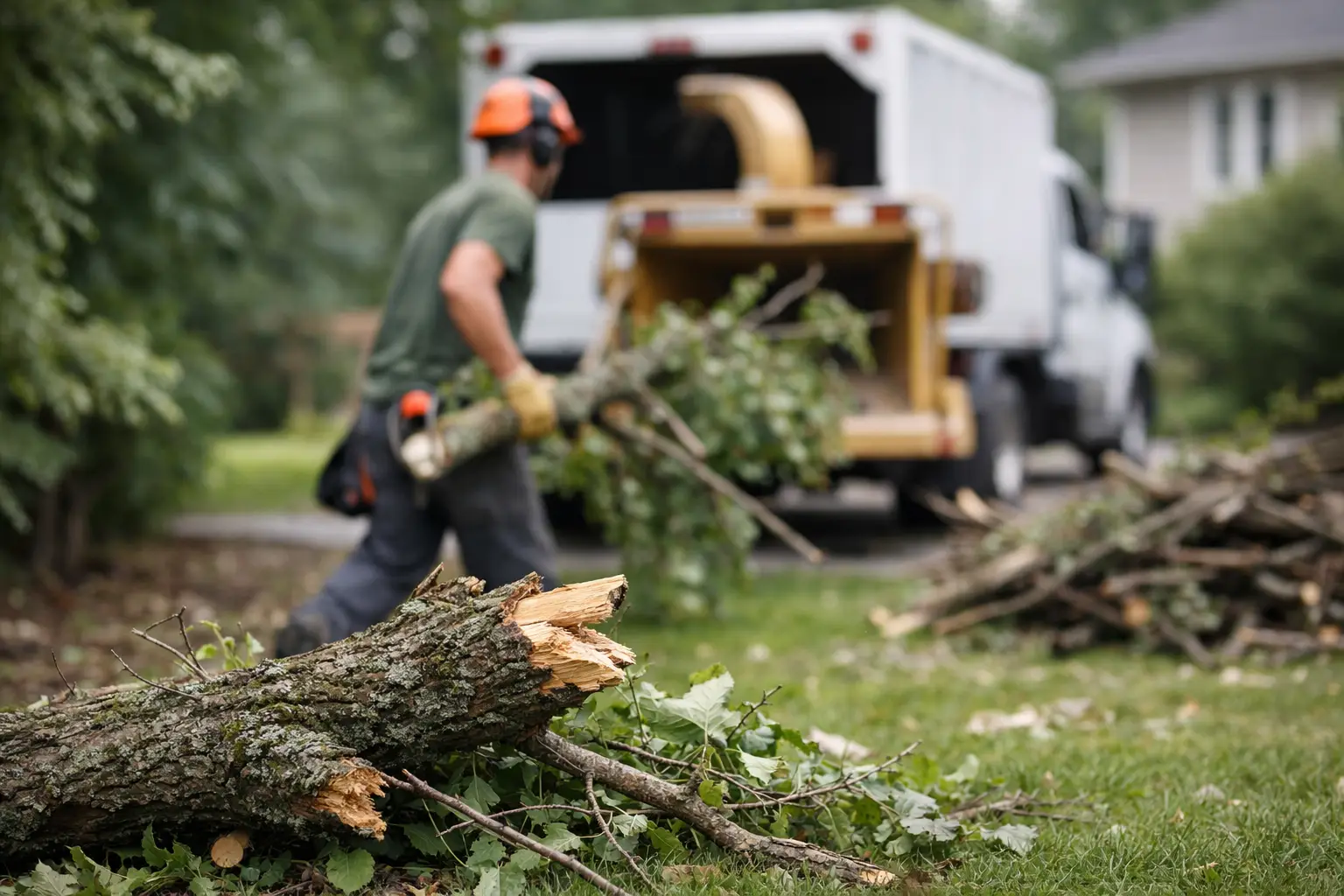
A large limb across the driveway is more than a yard cleanup problem. It can block access, damage a roof or fence, pull down a line, or create a trip hazard for tenants and visitors. If you are wondering who removes fallen tree limbs, the right answer depends on where the limb landed, what it damaged, and whether there is any electrical or public-safety risk.
For a limb that has fallen fully within your property and is not tangled in wires, a landscaping or tree service crew is usually the right call. For anything involving power lines, a road, a neighboring property, or a tree that is still unstable, the situation needs a different response. Acting quickly is smart, but safety comes before cleanup.
Who removes fallen tree limbs on private property?
In most cases, the property owner is responsible for fallen limbs that land in their yard, garden beds, parking area, or private driveway. A landscaping company can handle smaller to medium cleanup jobs: cutting manageable limbs into sections, hauling away branches, clearing debris, and restoring the area afterward.
This is often the best option after wind, heavy rain, or snow has brought down branches from a healthy-looking tree. The work may include more than loading debris into a truck. A proper cleanup crew can remove tangled brush, rake up smaller branches, clear blocked walkways, and make the property look cared for again rather than leaving a pile at the curb.
For homeowners, it may be a one-time cleanup. For strata properties and commercial sites, it may also be time to look at the bigger maintenance picture. Repeated limb failures near parking stalls, pedestrian paths, buildings, or common areas can signal overdue trimming or a tree that needs closer inspection.
When a landscaping crew is the practical choice
A general landscaping and property cleanup crew is a good fit when the limb is on the ground, accessible, and clearly separated from the tree. It is especially useful when the job also involves brush removal, hedge cleanup, leaf debris, or hauling away a large volume of green waste.
There is a trade-off. Landscaping crews are well suited to cleanup and routine trimming, but they should not be expected to climb a damaged tree, work close to energized lines, or remove a limb that is hanging under tension. Those jobs call for trained tree professionals with the right equipment and insurance coverage.
When to call an arborist or tree removal company
Call a qualified arborist or tree removal company when the fallen limb is still partly attached, hanging overhead, split into the trunk, or caught in another tree. These are not simple pickup jobs. A suspended limb can shift suddenly when cut, and a damaged trunk may continue to fail after the first branch comes down.
Tree professionals are also the better choice when a limb has caused structural damage or when the tree itself appears unsafe. Look for warning signs such as a fresh trunk crack, lifted roots, a major lean, several broken branches on one side, or a canopy that has changed shape after a storm. A tree may look stable from the ground while carrying serious internal damage.
An arborist can help determine whether the tree can be pruned and retained or whether removal is the safer long-term option. That assessment matters on shared strata grounds and commercial properties, where an unresolved tree hazard can affect residents, customers, employees, and visitors.
Do not try to pull down a hanging branch with a rope, ladder, pickup truck, or tractor. Those shortcuts can put people directly below the danger zone or cause the branch to swing into a building, vehicle, or fence.
Fallen limbs near power lines are a utility emergency
If a tree limb is touching, leaning on, or close to a power line, keep clear and contact the local utility provider immediately. Treat every wire as live, including wires that are on the ground. Do not touch the limb, the wire, a nearby fence, puddles, metal objects, or a vehicle that may be in contact with the line.
Keep children, pets, tenants, and employees away from the area. If the line is sparking, smoking, blocking a road, or creating an immediate hazard, call emergency services as well. The utility provider is responsible for making the electrical situation safe. Only after the line is confirmed safe should a tree or landscaping crew begin debris removal.
This is one area where the answer to who removes fallen tree limbs is very clear: nobody on site should attempt it until the utility has addressed the hazard. Even experienced grounds crews do not work on branches in electrical contact without the proper specialized qualifications.
What if the limb falls into the street or onto public land?
A limb blocking a public road, sidewalk, trail, or public right-of-way should be reported to the local public works department, municipality, or road authority. If it blocks traffic or creates an immediate safety issue, contact emergency services first.
Responsibility can be less straightforward when the tree grows on private property but the limb lands on public land. The city may clear the public obstruction, while the owner may still be responsible for the condition of a hazardous tree. Rules vary by location, so avoid assuming the municipality will remove everything simply because the branch is near the curb.
For strata and commercial managers, document the location before cleanup if it is safe to do so. A few photos can help show whether the limb was on private grounds, a common area, or a public access route. They may also be useful for maintenance records and insurance discussions.
If a neighbor’s tree drops limbs into your yard
A limb crossing the property line can create tension, especially when it damages a fence, shed, landscaping, or vehicle. Start with a calm conversation if possible. Many neighbors are willing to coordinate a cleanup, particularly after a widespread storm.
In general, responsibility often depends on the tree’s condition and the circumstances. A healthy tree dropping a branch during severe weather may be handled differently than a tree that had obvious dead limbs, visible decay, or prior warnings. Insurance policies and local rules can also affect the outcome.
Do not cut or enter your neighbor’s tree without permission, even if branches extend over your yard. You may be able to trim growth back to the property line in some circumstances, but cutting too aggressively can damage the tree and create a bigger dispute. When there is damage or uncertainty, take photos and contact your insurer or property manager before work begins.
What to do before the cleanup crew arrives
A fast response helps, but the first few actions should be simple and controlled. Keep people out of the area and do not park beneath damaged branches. If the limb has hit a structure, move valuables only if doing so is safe and does not disturb the damage.
Take clear photos from a safe distance. Photograph the limb, the tree, the surrounding area, and any damage to roofs, gutters, fences, vehicles, pavement, or landscaping. This is useful for a tree service quote, property records, and possible insurance claims.
Then identify the job accurately when requesting service. Let the contractor know whether the limb is fully on the ground, still attached, near wires, blocking access, or resting on a building. Photos and basic measurements help a crew arrive with the right tools, truck capacity, and number of workers.
Avoid cutting large limbs into pieces unless you understand where the tension is. Wood can pinch a saw blade, roll unexpectedly, or spring when pressure is released. Small loose twigs are one thing; a heavy branch under load is another.
Cleanup is also a chance to prevent the next failure
Once the debris is removed, look at why it fell. Storms can break healthy limbs, but recurring failures often point to deadwood, overextended branches, dense unmaintained growth, poor past pruning, or vines and blackberry canes pulling through the lower canopy.
Routine tree trimming helps reduce those risks when it is done properly. The goal is not to strip a tree bare. It is to remove dead or damaged branches, improve clearance over driveways and walkways, and reduce excess weight where it creates a hazard. Over-pruning can weaken a tree, so the right approach depends on species, age, location, and condition.
For managed properties, schedule inspections before the windiest and wettest parts of the year. Focus on trees near buildings, parking lots, play areas, entrances, garbage enclosures, and pedestrian routes. A small maintenance visit is easier to plan than an emergency cleanup during bad weather.
Hometown Landscaping Near Me helps Fraser Valley homeowners, strata councils, and commercial properties clear fallen limbs, brush, and storm debris when the work is safely accessible. If a tree remains damaged overhead or a line is involved, the right first step is to secure the area and bring in the appropriate specialist.
A fallen limb does not always mean a tree has to come down. But leaving debris, damaged branches, and blocked access points unattended can turn a manageable cleanup into a larger safety and property-maintenance issue. Clear the hazard, assess the tree, and put a practical maintenance plan in place before the next storm tests it again.
Leave a Reply