
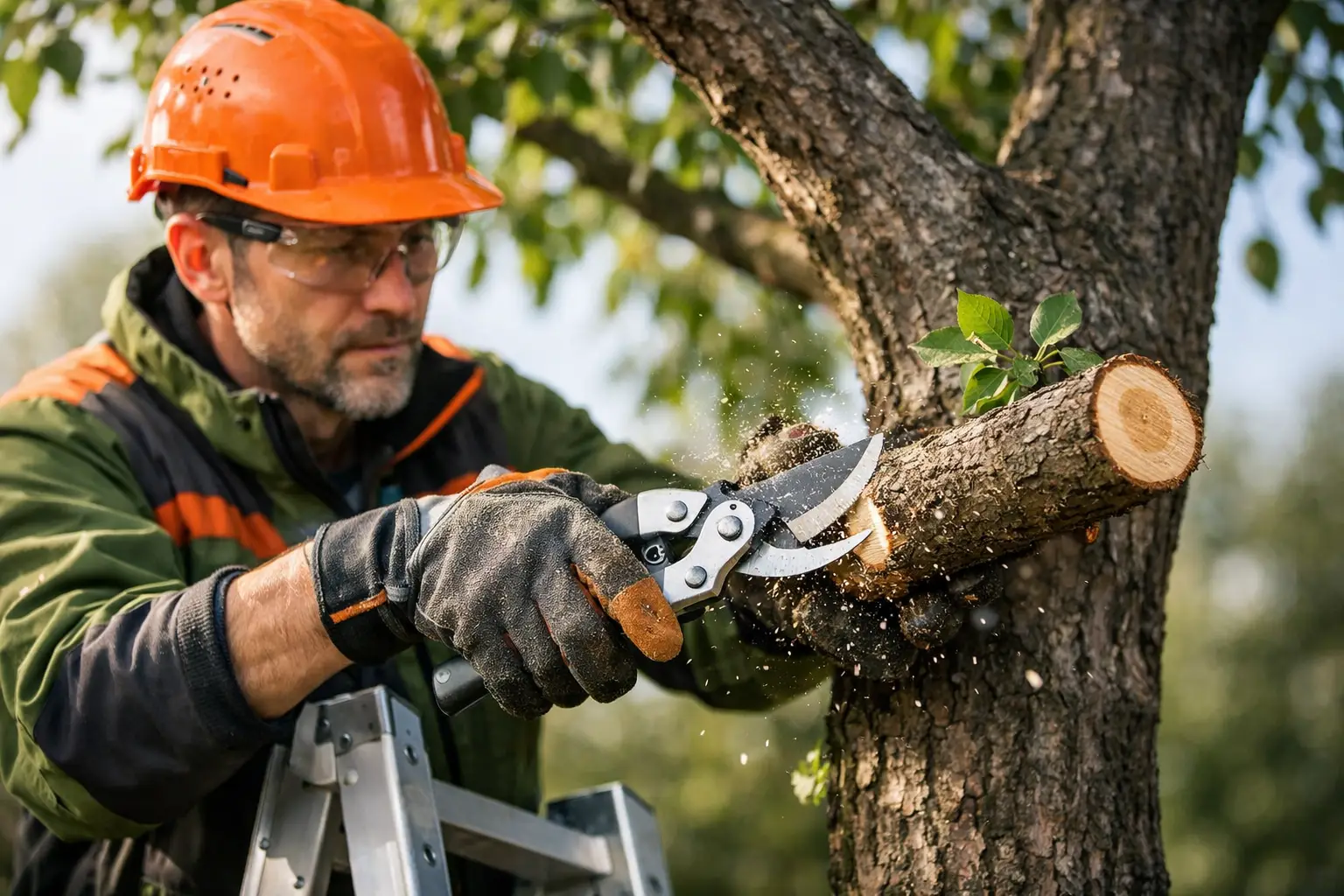
A tree can go from adding value to creating problems fast when branches start crowding a roofline, blocking sightlines, or hanging over walkways. If you’re wondering how to trim a tree properly, the goal is not just to cut it back. The goal is to improve safety, protect the tree’s health, and avoid making a bigger problem a year from now.
A lot of bad pruning starts with good intentions. People remove too much at once, cut in the wrong spot, or trim at the wrong time of year. The tree may survive, but it often responds with weak regrowth, exposed limbs, or long-term stress. Done right, trimming keeps the structure sound, reduces hazards, and helps the tree keep a clean, balanced shape.
Why proper trimming matters
Tree trimming is part appearance, part maintenance, and part risk control. On a residential property, overgrown limbs can scrape siding, drop debris into gutters, and reduce light around the yard. On strata and commercial sites, low branches can interfere with foot traffic, parking areas, signage, and general visibility.
The bigger issue is that poor cuts create openings for disease and decay. Trees do not heal the way people do. They seal off damage over time, and the location of each cut affects how well they can do that. If the cut is too flush or too far out, the branch stub or wound can become a weak point.
That is why learning how to trim a tree properly is less about cutting more and more about cutting with purpose.
How to trim a tree properly without damaging it
Start by looking at the tree as a whole. Stand back and check the canopy shape, the spacing between major limbs, and whether any branches are dead, rubbing, broken, or clearly growing in the wrong direction. If a tree has several major issues, it is usually better to address the worst problems first instead of trying to fix everything in one session.
The first branches to remove are dead, cracked, diseased, or hanging dangerously low. After that, look for limbs that cross and rub against each other. Friction wears off bark and creates an entry point for pests and decay. Then consider any branches growing inward toward the center of the canopy, since those can reduce airflow and create crowding.
When making a cut, the key is placement. Most branches should be cut just outside the branch collar, which is the slightly swollen area where the branch joins the trunk or a larger limb. That collar contains tissue the tree uses to seal the wound. Cutting into it can slow recovery. Leaving a long stub is not much better, because the tree may not close over that dead wood.
For smaller branches, one clean cut with sharp hand pruners or loppers is usually enough. For larger limbs, use the three-cut method to prevent bark tearing. Make a small undercut several inches out from the trunk, then a second cut from the top a bit farther out to remove the weight of the limb. Finish with the final cut just outside the branch collar. This extra step keeps the branch from peeling down the trunk as it falls.
When to trim and when to wait
Timing depends on the tree species, the reason for trimming, and the local conditions. In many cases, late winter or early spring is the best time for structural pruning because the tree is dormant and the branch framework is easier to see. Trimming at that stage can also encourage healthy spring growth.
That said, not every situation should wait for the ideal season. Broken limbs, storm damage, and branches creating a clear safety issue should be dealt with right away. If a limb is hanging over a driveway, roof, or entrance, the risk matters more than the calendar.
Some flowering trees are a separate case. If they bloom on old wood, trimming too early can remove the next season’s flowers. Fast-growing species can also respond aggressively to hard pruning, sending up a flush of weak shoots. That is where restraint matters. A lighter, better-planned trim is often more useful than a heavy cutback.
How much should you remove?
This is where many property owners go too far. As a rule, avoid removing more than about 20 to 25 percent of a mature tree’s canopy in a single season. Younger trees can handle shaping more easily, but mature trees do not respond well to major sudden loss.
If the canopy is severely overgrown, spread the work over more than one pruning cycle. Removing too much foliage at once reduces the tree’s ability to produce energy and can trigger stress growth. That new growth often looks full at first, but it is usually weaker attached and more likely to become a future trimming problem.
Topping is another mistake to avoid. Cutting back the top of a tree to blunt stubs may seem like a quick fix for height, but it weakens structure, ruins the natural form, and usually leads to fast, unstable regrowth. If a tree has outgrown the space, selective reduction or full removal may be the more practical option.
Tools matter more than most people think
Clean, sharp tools make a real difference. Dull blades crush plant tissue instead of slicing cleanly, and rough cuts are harder for the tree to seal. Basic trimming around a yard may only require hand pruners, loppers, a pruning saw, and a pole pruner. For anything larger, especially overhead work, the job changes quickly.
Safety matters just as much as plant health. Eye protection, gloves, stable footing, and awareness of power lines are non-negotiable. If you need a ladder and a saw at the same time, that is usually a sign the work should be handled by a trained crew with the right equipment.
On larger residential lots, strata sites, and commercial properties, the trimming itself is often only half the job. Brush removal, hauling, and site cleanup take time, and leaving that debris behind defeats the point of improving the property.
Common mistakes that cause long-term problems
The most common issue is over-pruning. People often want instant clearance or a dramatic visual change, but trees need enough live canopy to stay healthy. Another frequent mistake is making random cuts based on appearance instead of structure.
Improper cuts are also a problem. Flush cuts damage the branch collar, while long stubs invite decay. Topping, as mentioned earlier, creates weak regrowth and usually shortens the useful life of the tree in that location.
Then there is the question of tree type. A small ornamental tree near a front entry should not be handled the same way as a mature shade tree over a parking area. Fruit trees, evergreens, maples, and flowering species all respond differently. It depends on growth habit, age, season, and what you are trying to accomplish.
When it makes sense to call a professional
Some trimming is straightforward. Removing a few small dead branches from a young tree is one thing. Working around structures, traffic areas, fences, utility lines, or large mature limbs is something else entirely.
If the branch is heavy enough to cause damage when it drops, if the tree is already stressed, or if access is awkward, professional help is usually the safer and cheaper route in the long run. The cost of fixing torn bark, roof damage, or a badly weakened tree can exceed the cost of proper service the first time.
This is especially true on multi-unit and commercial properties where appearance, safety, and liability all matter. A dependable crew can handle the trimming, remove the debris, and leave the site clean instead of turning the job into a weekend project that drags on.
For property owners who want one contractor to handle broader exterior upkeep, tree trimming also fits into a bigger maintenance plan. That may include hedge trimming, brush clearing, seasonal cleanup, and ongoing site presentation. Hometown Landscaping Near Me works with exactly those kinds of clients who want the job done without chasing multiple vendors.
A better approach to tree care
The best trimming jobs are usually the least obvious. The tree looks cleaner, safer, and better balanced, but still natural. That comes from removing the right branches, making clean cuts, and not trying to force a quick cosmetic result.
If you are deciding how to trim a tree properly, think beyond today’s overgrowth. Good pruning should leave the tree healthier, the property safer, and next season’s maintenance easier to manage.
Leave a Reply