
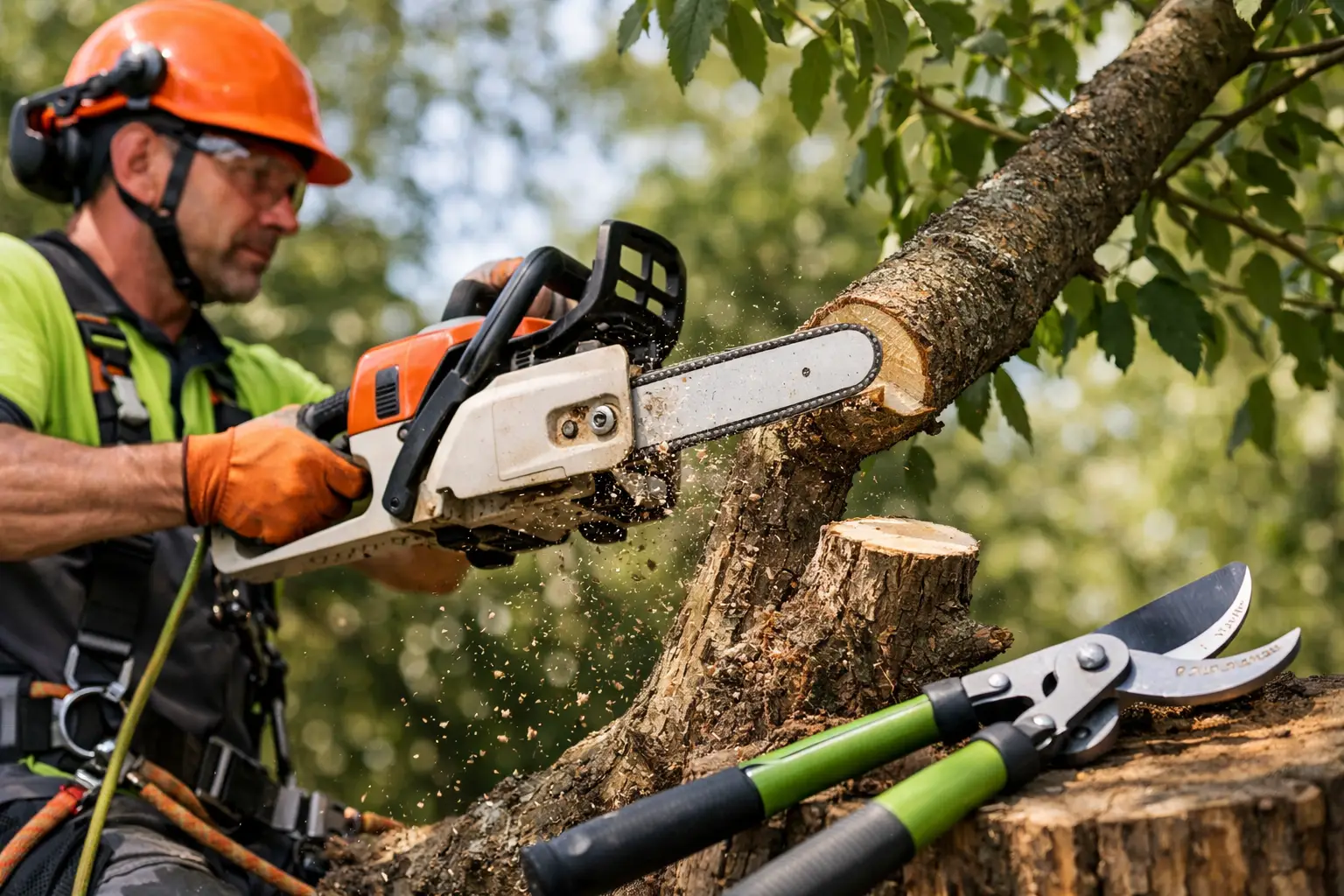
A low branch scraping a roof, limbs blocking a walkway, or a tree growing into power lines can turn a good-looking yard into a maintenance problem fast. For homeowners, strata properties, and commercial sites, tree work is not just about appearance. It is about keeping outdoor spaces safe, clear, usable, and easier to maintain.
What Is Tree Trimming?
What is tree trimming? Tree trimming is the selective removal of branches to control a tree’s shape, size, clearance, and condition. It may involve cutting back overgrown limbs, removing dead or damaged branches, lifting lower limbs away from paths and driveways, or thinning crowded growth so the canopy is better balanced.
The goal is not to cut as much as possible. Good trimming removes the right growth for a clear reason. That reason may be safety, better access, improved visibility, reduced interference with buildings, or a neater property appearance.
People often use tree trimming and tree pruning interchangeably. In everyday property maintenance, that is usually fine. Pruning is sometimes used more specifically for cuts made with the tree’s long-term health, structure, flowering, or fruit production in mind. Trimming commonly refers to the practical maintenance side of the job, especially when branches are overgrown or in the way.
Why Tree Trimming Matters on a Working Property
Trees add shade, privacy, and curb appeal, but they do not stop growing because a property needs clear parking, accessible sidewalks, or clean sightlines. Branches can gradually take over fences, signs, roofs, windows, driveways, and common areas. A regular trimming plan keeps that growth from becoming a larger cleanup or removal job later.
For homeowners, the most common concerns are branches hanging over roofs, low limbs across yards, and trees that make a property feel dark or crowded. A properly trimmed tree can open up a yard without removing the tree entirely. It can also make mowing, hedge work, pressure washing, and seasonal cleanup easier because crews have room to work around the property.
For strata councils and property managers, tree trimming is often part of keeping shared spaces presentable and safe. Low branches can obstruct walkways, parking areas, garbage enclosures, building entrances, and signage. Dead limbs above common areas create a concern that should not be ignored. Routine maintenance helps keep the site looking cared for while reducing surprise issues between scheduled service visits.
Commercial properties have similar needs, with more attention on access and visibility. Trees should not block storefronts, loading areas, security lighting, road signs, or customer parking. A tidy landscape gives customers and tenants a better first impression, but the practical benefit is just as important: people can move through the property safely.
Common Types of Tree Trimming
Tree trimming is not one single cut. The right approach depends on the tree species, its condition, its location, and what needs to be cleared.
Crown Raising
Crown raising, also called lifting, removes selected lower branches. This creates clearance under the tree for pedestrians, vehicles, lawn equipment, and sightlines. It is commonly needed along sidewalks, driveways, parking lots, and paths.
The work needs to be measured. Removing too many lower limbs at once can change the tree’s balance and expose more of the trunk to sun and weather. The goal is useful clearance, not an overly stripped look.
Crown Thinning
Crown thinning removes selected branches throughout a dense canopy. This can reduce crowding and allow more light and airflow through the tree. It is often used when the canopy has become heavy, tangled, or visually dense.
Thinning is different from cutting the outer edge of every branch. A trained crew chooses branches carefully so the tree keeps a natural shape. Poor thinning can leave weak growth, uneven gaps, or unnecessary stress on the tree.
Deadwood Removal
Deadwood removal means taking out dead, broken, hanging, or clearly damaged limbs. This is one of the most practical forms of tree maintenance because dead branches can fall without warning, especially during wind, heavy rain, or snow.
Deadwood may not always be obvious from the ground. A branch can look mostly normal while having decay, cracks, or weak attachment points closer to the trunk. If a tree is near a home, parking area, public walkway, or play space, it is worth having visible concerns checked before they become urgent.
Clearance Trimming
Clearance trimming focuses on branches that are interfering with a structure or use area. This can include limbs touching a roof, growing against siding, crowding windows, blocking cameras, or extending over a driveway.
Branches should not be allowed to rub repeatedly against buildings. Besides the potential for physical damage, close growth can trap moisture and make routine exterior maintenance harder. A clear gap around roofs, gutters, fences, and structures makes it easier to spot problems and keep the area clean.
The Right Time to Trim a Tree
There is no single month that works for every tree. The best timing depends on the species and the reason for trimming. Many trees are trimmed during their dormant season, when there are no leaves and the branch structure is easier to see. Dormant-season work can also be less disruptive for certain trees.
That said, safety work should not wait for the perfect season. A cracked limb over a driveway, a branch pressing against a building, or deadwood above a busy walkway needs attention when it is found. Light clearance trimming can also be handled as needed when growth begins to affect the property.
Spring and summer trimming may be appropriate for access, visibility, or ongoing site maintenance, but heavy cutting during active growth can stress some trees. Fall can also be a poor time for major pruning on certain species. A good approach considers the tree’s health rather than following a calendar alone.
What Proper Tree Trimming Should Not Do
A tree should not be topped. Topping is the practice of cutting major limbs or the upper section of a tree back to blunt stubs. It may make a tree look smaller for a short time, but it often leads to weak, fast-growing shoots and a poor long-term structure. It can also leave large wounds that make the tree more vulnerable to decay.
Proper trimming also should not remove too much live canopy in one visit. Taking off a large portion of healthy foliage can shock a tree and reduce its ability to produce energy. The tree may respond with dense, weak regrowth, creating more work down the road.
Finally, not every tree issue can be solved with trimming. A tree with major decay, a split trunk, root damage, severe lean, or repeated large limb failure may need a closer assessment. In some cases, removal is the safer and more cost-effective option than repeated cuts on a failing tree.
When It Makes Sense to Hire a Crew
Small branches that can be reached safely from the ground may be manageable for a property owner with the right tools. Once a job involves ladders, heavy limbs, roof access, nearby structures, or electrical lines, it is time to bring in experienced help.
Tree work carries real risks. Branches do not always fall where expected, and a saw used from a ladder can turn a simple job into an injury or property damage claim. A crew can plan the cuts, manage the drop zone, handle the cleanup, and remove the debris instead of leaving a pile for the owner or maintenance staff.
For properties that already need lawn care, hedge trimming, brush removal, or seasonal cleanup, it also helps to work with one dependable maintenance provider. Hometown Landscaping Near Me can handle tree trimming as part of a broader property cleanup plan, so overgrowth, branches, and site presentation are addressed in one coordinated visit.
Signs Your Property Is Due for Tree Trimming
Look around the property after a windy day or during routine yard work. Branches touching the home, hanging over parking spaces, blocking lights, or limiting access are clear signs that trimming is needed. Dead limbs, broken branch ends, and dense growth around roofs or fences should also be addressed.
You may also notice that a tree is making another maintenance task harder. If mowing under it is difficult, hedges cannot be reached properly, a walkway stays damp and shaded, or a contractor cannot access part of the building, selective trimming can make the whole property easier to manage.
A well-trimmed tree should still look like a tree, not like it has been cut back at random. The best results leave the property cleaner, safer, and more open while respecting the tree’s natural form. When branches start competing with the way your home, strata site, or business needs to function, taking care of them early is usually the simpler job.
Leave a Reply