
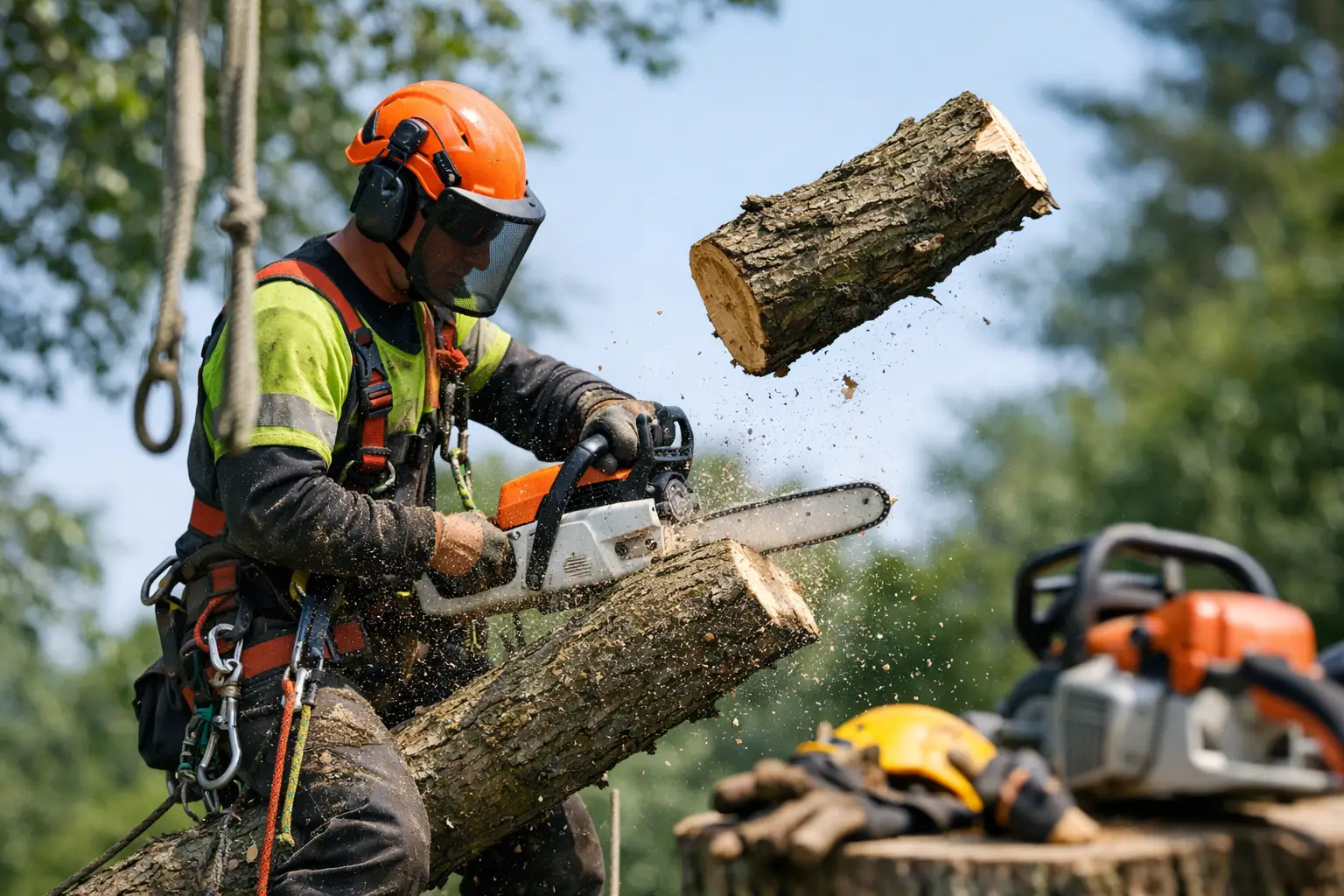
A loose branch over a driveway, a hedge-shaped tree blocking a walkway, or limbs scraping a roof can look like a quick weekend job. But is tree trimming dangerous? It can be, especially when the work involves height, heavy limbs, power lines, unstable trees, or tools that can cause serious injury in seconds. The risk is not limited to large tree removals. Even a modest trimming job can go wrong when someone underestimates the weight of a branch or loses footing on a ladder.
For homeowners, strata councils, and commercial property managers, the goal is simple: keep trees healthy, clear, and out of the way without creating a bigger safety problem. Knowing where the line is between light yard work and professional tree service helps protect people, buildings, vehicles, and the tree itself.
Why Tree Trimming Can Be Dangerous
Tree trimming combines several hazards at once. You may be working above the ground, operating cutting equipment, managing falling material, and trying to judge how a living tree will react when weight is removed. A branch that appears small from the ground can be heavier than expected, particularly when it is wet or covered in dense growth.
Falls are one of the most common risks. Ladders can shift on soft ground, patios can be slick, and reaching sideways to make a cut throws off balance quickly. Climbing a tree without the right equipment adds another level of danger. Bark can break away, dead limbs can snap, and a branch that looks solid may not support a person’s weight.
Cutting tools also require attention. Hand saws, pole saws, chainsaws, and hedge trimmers each have a place, but they can cause injuries when used from an awkward position or above shoulder height. Trying to catch a falling tool or branch is another mistake that can turn a routine job into an emergency.
Falling Limbs Do Not Always Go Where You Expect
Branches do not always drop straight down. They can swing, twist, bounce off another limb, strike a fence, or roll after landing. When a branch is partially supported by other growth, it can stay in place after a cut and release later without warning.
This is why the work area matters as much as the cut itself. Cars, windows, roofs, garden structures, sidewalks, and neighboring yards all need to be considered before trimming starts. On strata and commercial properties, the area may also include tenants, visitors, delivery drivers, and staff moving through the site.
Power Lines Change the Job Completely
If limbs are touching, near, or growing toward utility lines, do not treat the job as normal trimming. Electricity can travel through a branch, a tool, or a person. Even getting close to overhead lines can be dangerous, and the safe clearance depends on the line and conditions.
Keep people, ladders, and equipment well away from power lines. Contact the utility provider or a qualified tree professional who understands the proper process. This is not a situation for improvising with a pole saw.
What Makes a Tree Trimming Job Higher Risk?
The size of the tree matters, but it is not the only factor. A small tree beside a busy entrance can require more planning than a larger tree in an open field. Weather, access, tree condition, and nearby structures all affect the job.
A tree is more likely to need professional attention when it has dead wood, visible cracks, fungal growth, storm damage, leaning sections, or branches growing over a roof or parking area. Dense blackberry vines and overgrown shrubs around the base can also make it harder to see roots, holes, stumps, or other trip hazards.
Wind adds risk because it changes how branches move and fall. Rain makes ladders, bark, and paved surfaces slippery. In the Fraser Valley, wet conditions can last long enough that waiting for a better day is often the smart choice. A job that is manageable in dry, calm weather may not be safe after a storm.
Can You Trim a Tree Safely Yourself?
Some light trimming can be reasonable for a homeowner who is working from the ground and has the right basic tools. Removing small, reachable shoots or minor dead twigs from a young tree is different from cutting overhead limbs. The safest rule is to stay within easy reach, avoid ladders, and stop when the branch is large enough that you cannot confidently control where it lands.
Do not use a ladder while operating a chainsaw or pole saw. Do not cut above your head, and do not work alone when branches are being removed. A second person can help keep the area clear and call for help if something goes wrong, but they should never stand beneath the branch being cut.
Personal protective equipment also matters. Eye protection, work gloves, sturdy footwear, hearing protection for powered tools, and a hard hat for overhead work can reduce injury risk. These items do not make a high-risk job safe, though. They are a last layer of protection, not a substitute for proper planning and experience.
When to Hire a Tree Trimming Crew
Calling a professional is usually the better decision when the work goes beyond basic ground-level maintenance. The cost of a crew should be weighed against the cost of a damaged roof, broken window, injured person, or poorly cut tree that later needs removal.
Hire help when the job includes any of the following:
- Branches over a house, garage, fence, vehicle, sidewalk, or public area
- Limbs near overhead power, communication, or service lines
- Trees that are tall, leaning, dead, damaged, or difficult to access
- Large limbs that require ropes, controlled lowering, or climbing
- Storm-damaged trees with hung-up or partially broken branches
A dependable crew can assess the tree from the ground, identify the safest approach, control the drop zone, and remove debris once the trimming is complete. For property managers, this is especially useful because one service provider can handle the trimming, brush clearing, hauling, and general cleanup without leaving a half-finished site behind.
Tree Trimming Safety for Strata and Commercial Properties
Shared and public-facing properties need a higher level of planning. A branch over a walkway is not just an appearance issue. It can create a hazard for residents, customers, children, contractors, and delivery personnel. Overgrown trees can also reduce sightlines at parking lot exits, cover exterior lighting, block signage, and interfere with routine grounds maintenance.
Schedule trimming when the work area can be controlled. Notify residents or tenants when access may be limited, keep vehicles out of the drop zone, and use clear barriers around active work. If regular maintenance is needed, a recurring schedule is often easier and safer than waiting until branches become overgrown or damaged.
Routine trimming also supports better property presentation. Trees that are kept clear of buildings, walkways, and signs make lawn care, pressure washing, and seasonal cleanup easier to complete. The result is a cleaner site that feels cared for without turning every maintenance issue into a separate contractor call.
What a Proper Tree Trimming Job Should Include
Good tree work is not just about cutting back whatever is in the way. The crew should look at which limbs are dead, crossing, damaged, overcrowded, or interfering with structures and access. Cuts should be made carefully so the tree can recover and maintain a balanced shape where possible.
The job should also include protecting the surrounding property. That means setting up a work zone, planning where material will land, keeping people clear, and removing branches rather than leaving piles at the curb or across a lawn. Cleanup matters because scattered limbs, sawdust, and hidden stubs can create new hazards after the crew leaves.
There are trade-offs. Heavy trimming may create immediate clearance, but cutting too much at once can stress a tree and cause uneven regrowth. In some cases, selective trimming is the right answer. In others, a damaged, declining, or poorly located tree may need removal instead of repeated cutting. A site assessment helps determine the practical option.
Do Not Wait for the Next Storm
Dead branches and overgrown limbs rarely improve on their own. If you see cracking, hanging branches, growth against a building, or limbs hanging over a high-use area, address it before wind or heavy rain makes the problem worse. Taking care of it early usually gives you more options and a safer, cleaner result.
For straightforward local tree trimming, brush clearing, and full property cleanup, Hometown Landscaping Near Me can help keep the work organized and the site looking right. A quick assessment before cutting starts is often the easiest way to avoid a dangerous job later.
Leave a Reply