
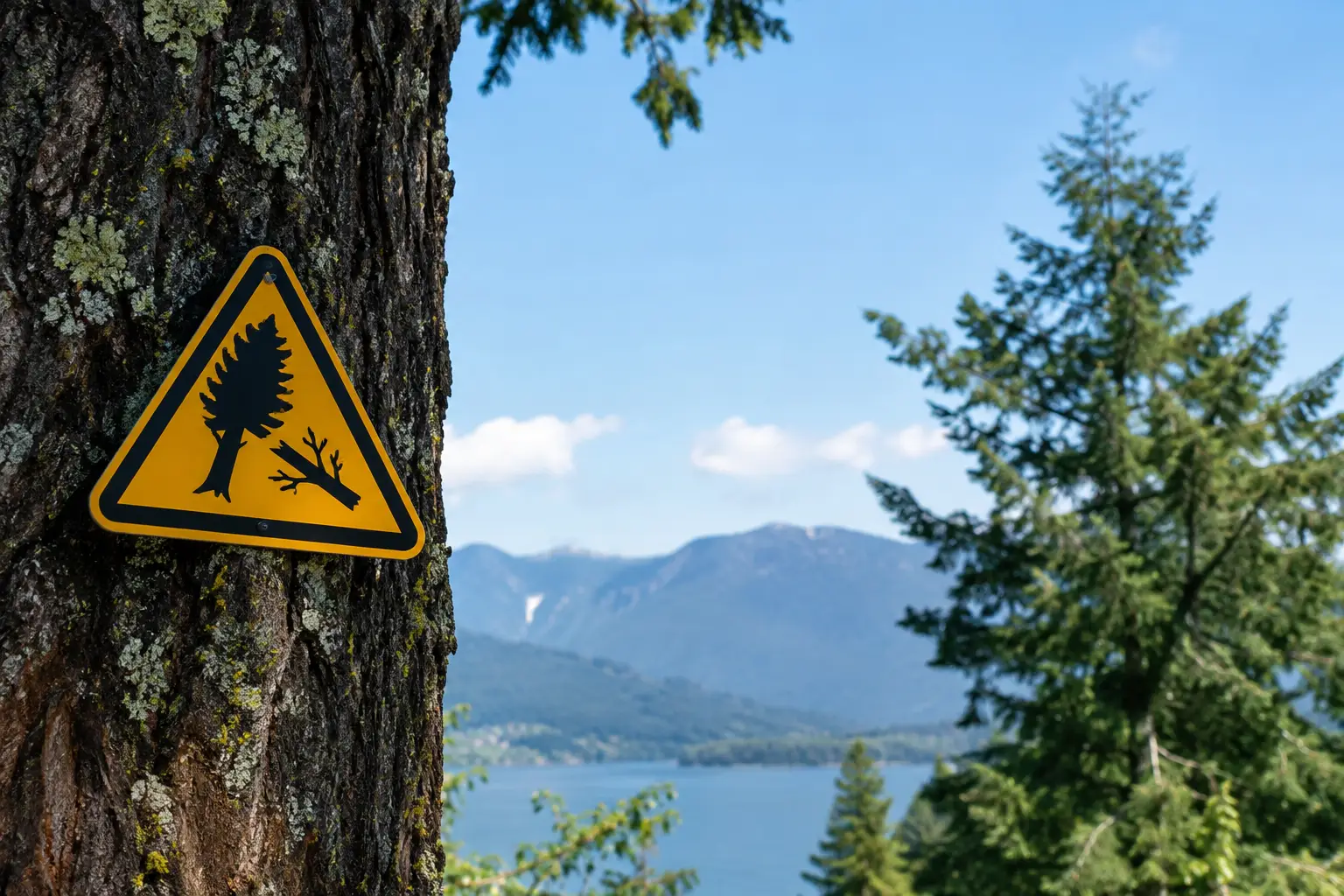
A tree can look healthy from the driveway while carrying a serious problem overhead. Tree hazard signs are not always obvious, especially after long wet periods, heavy wind, or years of uneven growth. For homeowners, strata councils, and commercial property managers, the goal is not to remove every mature tree. It is to spot trouble early, protect people and property, and arrange the right work before a manageable issue becomes an emergency.
Why tree hazards deserve a closer look
A hazardous tree is one that has a higher chance of dropping limbs, splitting, uprooting, or failing near a target. That target may be a home, parked vehicle, sidewalk, playground, fence, power line, or the entrance people use every day.
In the Fraser Valley, saturated ground can weaken root support, while seasonal wind can expose defects that have been building for years. Dense growth also hides damaged limbs and trunk problems. A tree in an open field may be able to stand with a defect for a long time. The same tree beside a building or busy walkway needs prompt attention because the consequences are different.
Regular visual checks are practical property maintenance. You do not need to diagnose every issue yourself, but you should know when a tree needs a professional look.
Tree hazard signs you can see from the ground
Dead, hanging, or broken branches
Dead branches are often brittle, bare when the rest of the tree is leafing out, or missing smaller twigs and bark. A single small dead branch high in a large tree may not be urgent. Large dead limbs over a driveway, patio, roof, or pedestrian area are a different matter.
Also watch for branches that are cracked, partly detached, or caught in the canopy after a storm. These are sometimes called hangers because they can fall without much warning. Keep people out from underneath and do not try to pull or shake them loose from the ground.
Cracks, splits, and weak branch connections
A crack in the trunk or a large split where two main stems join is a clear warning sign. Some trees naturally grow with multiple trunks, but tight V-shaped connections can trap bark between stems. That included bark prevents a strong connection and raises the risk of splitting as the tree gets larger or carries snow, rain, or wind load.
Fresh cracks, peeling bark around a split, or a visible opening that was not there before should be taken seriously. The risk is higher when the defect faces a house, parking area, public sidewalk, or neighboring property.
Leaning that is new or getting worse
Not every lean means a tree is unsafe. Many established trees grow at an angle and remain stable for decades. The concern is a lean that appears suddenly, increases over time, or comes with other changes such as lifted soil, exposed roots, or cracks in the ground.
Check the base after a major windstorm or prolonged rain. If the root plate is heaving on one side, soil is mounding, or the trunk has shifted noticeably, keep clear of the area. A newly leaning tree can fail quickly when its roots have lost their grip in wet ground.
Root problems at the base
Roots are the foundation of the tree, but most of them are shallow and spread well beyond the trunk. Construction cuts, trenching, driveway work, compacted soil, repeated vehicle traffic, and grade changes can all damage roots. The tree may not show a full response until months or years later.
Look for exposed roots that are broken or decayed, mushrooms or fungal growth around the base, cavities near ground level, and soil cracking or lifting. Fungal growth does not automatically mean a tree will fall, but it can point to decay that needs assessment, particularly when paired with a lean or trunk damage.
Cavities, decay, and missing bark
A hollow area, large cavity, or section of missing bark can indicate internal decay. Trees can sometimes compensate for decay by building strong wood around it, so a cavity alone does not tell the whole story. Still, decay in the lower trunk, at a major limb attachment, or near a high-use area deserves a closer inspection.
Do not assume a thick layer of callus tissue means the problem is resolved. Trees can seal over an old wound while decay continues inside. A trained tree professional can assess the location, extent, and practical risk of the defect.
Canopy thinning or sudden dieback
A thinning canopy, unusually small leaves, dead tips, or branches that fail to leaf out can signal stress. Drought, pests, disease, root damage, and poor growing conditions can all be factors. One dead section may be a localized pruning issue. Dieback across a large part of the canopy is more concerning.
Compare the tree with similar trees nearby and with how it looked in previous seasons. Sudden change is usually more useful information than one imperfect branch.
Check trees after weather and property work
A quick walk-around after high winds, snow, or extended rainfall can prevent surprises. Start at a safe distance and look up, then inspect the trunk and ground around the base. Do not stand beneath questionable limbs while checking them.
Property changes deserve the same attention. If excavation, utility work, new paving, drainage changes, or heavy equipment has occurred near a mature tree, inspect it periodically for stress. Damage to roots is easy to miss at the time, yet it can affect stability later.
For strata and commercial sites, make tree checks part of seasonal grounds maintenance. Record the location of concerns, take dated photos, and note whether the tree is near public access, parking stalls, play areas, or buildings. Clear records help prioritize work and show that known issues were addressed responsibly.
What to do when you find a concern
The right response depends on the size of the defect, the tree’s location, and what it could hit if it fails. A small dead limb over a lawn may be scheduled with routine pruning. A split leader over a front entrance should be treated as a priority.
Keep people, pets, vehicles, and equipment outside the drop zone. If practical, block off a walkway or parking stall until the hazard is assessed. Do not climb the tree, use a ladder near damaged limbs, or attempt to cut overhead branches with homeowner tools. Tree work involves unpredictable weight, tension, and falling material.
If a tree or branch is touching a power line, stay away and contact the utility provider or emergency services as appropriate. Never attempt to move a branch off a line yourself.
A professional assessment can determine whether selective pruning, cabling or bracing, removal of a damaged limb, or full tree removal is the sensible option. Removal is not always necessary. Proper pruning can reduce weight on a weak limb, remove deadwood, and improve clearance. But pruning cannot fix every structural defect, and topping a tree often creates weak regrowth and more maintenance problems later.
Prioritize hazards where people use the property
The same tree condition carries different urgency depending on the location. A large dead limb over a rarely used back corner is still a concern, but it does not carry the same immediate exposure as one over a school pickup area, storefront entrance, shared walkway, or resident parking.
For managed properties, focus first on trees near high-traffic areas and critical access routes. Then address branches rubbing roofs, blocking sightlines, crowding service areas, or interfering with lighting and signage. Scheduled trimming keeps many of these issues from becoming urgent cleanup jobs.
Hometown Landscaping Near Me can help property owners identify visible concerns, handle practical pruning and removal work, and clean up the site when the job is complete. For major structural concerns or trees near utilities, the safest next step is a qualified assessment before any cutting begins.
A mature tree adds shade and value when it is maintained with care. If something looks newly cracked, dead, leaning, or unstable, trust that observation and get it checked before the next storm puts it to the test.
Leave a Reply