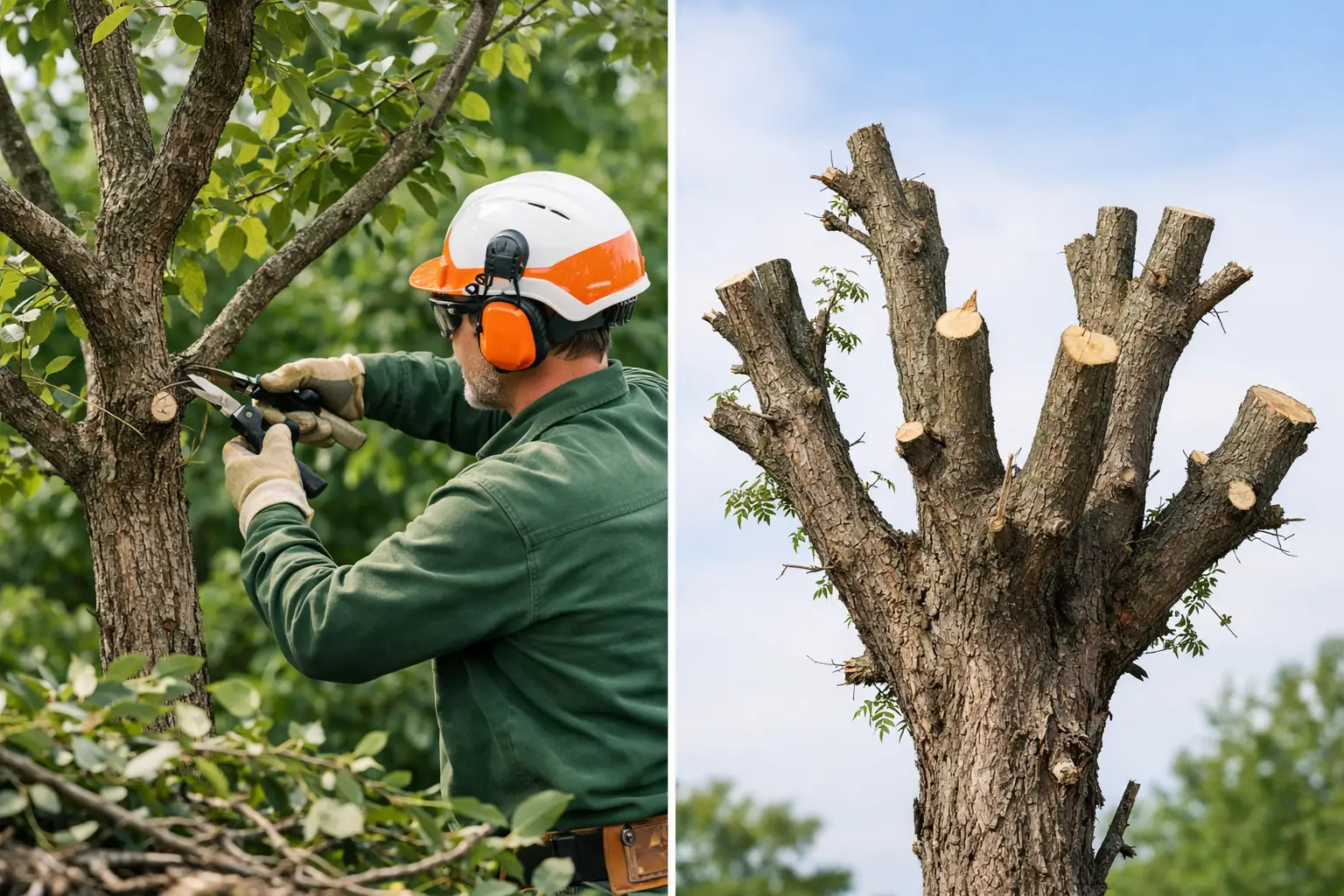
A mature tree can be one of the best features on a property – until low limbs block a driveway, branches reach a roof, or the canopy becomes too dense. When that happens, property owners often hear two terms: pruning versus topping mature trees. They are not interchangeable. One method works with the tree’s structure; the other can create expensive problems that show up months or years later.
For homeowners, strata councils, and commercial property managers, the goal is usually simple: reduce risk, improve clearance, and keep the property looking maintained. The right approach depends on the tree’s species, age, condition, location, and the amount of work needed. But in most situations, proper pruning is the safer long-term choice.
What Proper Pruning Does for a Mature Tree
Pruning means making selective cuts to remove dead, damaged, diseased, rubbing, or poorly placed branches. It can also raise lower limbs for pedestrian or vehicle clearance, reduce weight on overextended branches, and thin crowded areas of the canopy when appropriate.
The key word is selective. A good pruning job keeps the tree’s natural shape and leaves enough live canopy to support its health. Cuts are made at the correct branch unions so the tree can seal the wound as effectively as possible. The work should solve a specific property issue, not just make the tree smaller for the sake of making it smaller.
For example, a mature maple growing over a parking area may need deadwood removed and lower limbs raised for delivery vehicles. A tree beside a house may need branches cleared back from the roof, gutters, and siding. Those are practical pruning needs that improve access and reduce maintenance without stripping the tree of its structure.
Proper pruning can help with:
- Removing hazardous dead or broken limbs
- Improving clearance over sidewalks, driveways, roads, and roofs
- Reducing branch weight where a limb is overextended
- Keeping branches away from buildings, lights, and service areas
- Improving the appearance and manageability of an overgrown canopy
It does not make every mature tree permanently safe or stop all future growth. Trees need ongoing attention, especially on properties with regular foot traffic, parked vehicles, play areas, or public-facing entrances.
What Topping Means and Why It Causes Problems
Topping is the practice of cutting large upright branches or the main leader back to stubs or indiscriminate points. It is often done because a tree seems too tall, too wide, or too close to a building. The immediate result can look dramatic: the tree is suddenly shorter and the property feels more open.
That short-term result is why topping still happens. It can appear cheaper and faster than careful pruning, particularly when a tree has been neglected for years. But the tree often responds by sending up multiple fast-growing shoots near the cuts. These shoots are usually weakly attached compared with normal branches.
Instead of one well-structured limb, the topped area may produce a cluster of tall, poorly connected growth. Within a few years, the tree can be just as tall or wider than before, but less stable and more difficult to manage. The property owner then faces repeat work, higher maintenance costs, and potentially greater branch-failure risk.
Large topping cuts also expose substantial wood. Mature trees do not heal wounds in the same way people heal cuts. They compartmentalize damage and grow around it over time. Big, poorly placed cuts can be harder for the tree to manage, especially if decay enters the exposed area.
Pruning Versus Topping Mature Trees: The Real Difference
The difference comes down to structure and future growth. Pruning removes or shortens selected branches while preserving sound branch connections and a balanced canopy. Topping removes major portions of the crown without regard for the tree’s natural growth pattern.
A properly pruned tree may still look like it has been worked on, but it should not look butchered. The canopy remains recognizable, and the changes should make sense from the ground. A topped tree often has blunt branch ends, missing leaders, and an unnatural flat or rounded outline.
Pruning is also more useful for property management because it addresses the actual issue. If branches are over a roof, targeted clearance is usually the answer. If low limbs obstruct a walkway, raising the canopy may be appropriate. If a branch has excessive end weight, reduction pruning can shorten it back to a suitable lateral branch.
Topping treats height as the only problem, even when height is not what is creating the hazard. That is why it rarely provides a lasting fix.
When Heavy Reduction May Be Necessary
There are situations where a mature tree needs more than light maintenance pruning. Storm damage, previous poor cuts, utility conflicts, disease, structural defects, and major clearance issues can require substantial reduction work.
That does not automatically mean topping is the right answer. A qualified tree professional may use crown reduction methods that shorten branches back to suitable lateral limbs. This reduces overall spread or height while giving the remaining branches a reasonable role in the tree’s structure.
Even then, there are limits. A badly compromised tree may not be a good candidate for repeated reduction. If decay, root damage, major cracks, severe lean, or extensive dieback are present, removal may be safer than trying to force the tree into a smaller size.
This is particularly relevant for strata and commercial sites. A mature tree near visitor parking, entrances, common walkways, or outdoor seating areas needs decisions based on risk and site use, not just appearance. Sometimes a smaller replacement tree is the more practical long-term choice.
Signs Your Tree Needs Attention
You do not need to wait until a branch falls to schedule an assessment. Look for dead limbs, hanging branches, limbs rubbing against the building, branches touching utility lines, or canopy growth that blocks sightlines near driveways and roads.
Other warning signs include visible cracks, cavities, mushrooms around the base, peeling bark, sudden thinning, or a tree that has started leaning after heavy rain or wind. These signs do not always mean immediate removal is necessary, but they are worth evaluating promptly.
For recurring property maintenance, seasonal checks make sense. After windstorms, snow, or prolonged wet weather, a quick inspection can catch broken limbs and new clearance issues before they become a larger cleanup job.
Choosing the Right Scope of Work
Before approving tree work, be clear about the result you need. Do you need roof clearance, safer pedestrian access, improved visibility, deadwood removal, or a general cleanup of an overgrown canopy? A clear goal helps prevent unnecessary cutting.
Be cautious of anyone who recommends removing most of the top of a healthy mature tree as a standard solution. Ask what cuts will be made, why they are needed, and how the work will affect future growth. For large, hazardous, or technically difficult trees, the crew should have the right equipment and a plan for protecting nearby buildings, fences, landscaping, and vehicles.
Cleanup matters too. Tree work can leave behind heavy limbs, sawdust, and damaged turf if it is rushed. A complete job includes hauling debris, leaving access areas clear, and making sure the property looks better when the work is done.
A Better Way to Manage Mature Trees
Mature trees are not maintenance-free, but they do not need aggressive cutting every year. A planned pruning schedule can keep branches away from structures, remove developing problems early, and avoid the shock and expense of major corrective work later.
If a tree repeatedly outgrows its space, topping it is usually a sign that the wrong tree was planted in the wrong location or that the tree has gone too long without proper care. Selective pruning may manage it for a time, while removal and replacement can be the better decision in severe cases.
The practical choice is to address the specific issue without creating a bigger one. When mature trees need attention, careful pruning protects the property, preserves the tree where possible, and avoids turning a straightforward maintenance job into a recurring problem.
Leave a Reply