
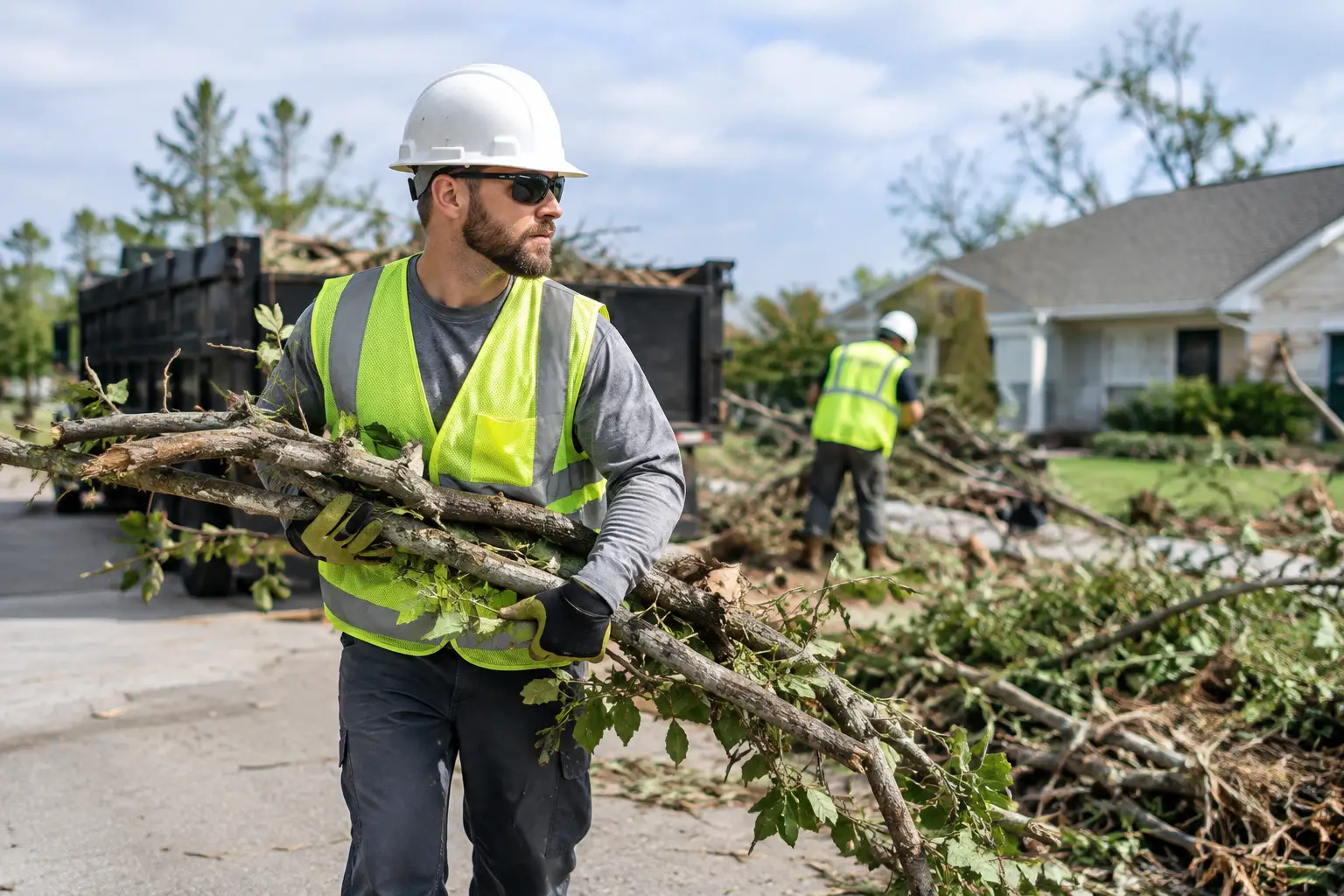
A storm can turn a maintained property into a work site in one night. Fallen branches, scattered fencing, flooded planting beds, clogged drains, and windblown junk create more than a messy appearance. Storm debris recovery is about making the property safe, accessible, and usable again without creating new damage during cleanup.
For homeowners, that may mean reopening a driveway, clearing a patio, and dealing with a damaged tree. For strata councils, property managers, and commercial operators, the job is often larger: shared walkways, parking areas, entrances, drainage routes, and public-facing landscaping all need attention quickly. The right order of work matters.
Storm Debris Recovery Starts With Safety
Do not begin by grabbing a chainsaw or dragging a large branch across the yard. Walk the property first from a safe distance and look for hazards that can change the scope of the job. Downed power lines, leaning trees, hanging limbs, damaged roofs, standing water near electrical equipment, and unstable fencing need to be treated seriously.
If a tree or branch is touching a power line, keep everyone away and contact the utility provider. Do not try to move it with wood, plastic tools, or equipment. If a tree has fallen on a building, vehicle, or occupied area, take photos from a safe location before moving anything. That documentation can help with insurance discussions later.
Pay attention to what is overhead as well as what is on the ground. A branch caught high in another tree may fall after the wind has stopped. These suspended limbs, often called hangers, are one of the reasons storm cleanup is not always a do-it-yourself job.
Handle Access and Water First
The first cleanup priority is usually safe access. Clear the main entrance, driveway, sidewalk, emergency exits, and any route needed for residents, tenants, deliveries, or service vehicles. On a commercial or strata property, blocked walkways can quickly become a liability issue, especially if people are stepping around branches or slippery debris.
Next, look at water flow. Heavy rain carries leaves, needles, bark, and loose soil into gutters, catch basins, and drainage channels. If water has nowhere to go, it can pool against foundations, flood low areas, damage turf, and make paved surfaces slippery. Removing debris from visible drainage paths can prevent a small cleanup problem from becoming a water damage problem.
Avoid pushing storm debris into the street or piling it over drains. That may seem like a quick fix, but it can block runoff and move the issue onto a neighboring property or public right-of-way. Keep materials contained on site until they can be sorted and removed properly.
Sort Debris Before Hauling It Away
Not all storm debris should be handled the same way. Clean branches, brush, and leaves may be suitable for green waste processing. Broken fence panels, damaged patio furniture, soaked cardboard, construction material, and general trash need separate disposal. Mixing everything into one pile can make removal slower and more expensive.
A practical storm debris recovery plan separates material into manageable groups: green waste, wood and branches, recyclable material, and damaged junk or construction debris. This also gives you a clearer picture of what needs to be replaced versus what only needs cleanup.
For example, a branch pile may hide a broken irrigation head, damaged landscape lighting wire, or a section of crushed garden edging. Once the large debris is removed, inspect the area before bringing in fresh mulch, plants, or gravel. Covering damage too early can lead to repeat work later.
Trees Need a Careful Assessment
A tree does not have to be fully down to be unsafe. High winds can crack limbs, loosen root systems, split trunks, and leave trees leaning toward homes, walkways, parking areas, or neighboring lots. Even healthy-looking trees can be compromised after saturated soil and strong wind.
Small branches that can be reached from the ground may be manageable with proper hand tools and protective gear. Larger limbs, trees under tension, and anything requiring climbing or elevated cutting should be left to trained professionals with the right equipment. Cutting a branch that is bent, pinned, or carrying weight can cause it to snap back or roll unexpectedly.
It also helps to think beyond the immediate mess. A rushed cut can leave a poor pruning wound, encourage future decay, or unbalance the tree. Proper trimming removes damaged material while protecting the structure of the tree where possible. In some cases, removal is the safest option. In others, targeted cleanup and corrective pruning can preserve a valuable mature tree.
Protect Landscaping During Cleanup
Storm cleanup equipment can cause damage if the work is not planned. Driving over saturated lawns compacts soil and leaves ruts. Dragging branches across soft garden beds can tear plants out by the roots. Using heavy machinery near a wet slope can create erosion problems that were not there before the storm.
A good cleanup approach uses the least disruptive method that still gets the job done efficiently. That may mean staging debris on a hard surface, using plywood to protect soft ground, or hand-clearing sensitive areas before equipment is brought in. The trade-off is that careful work can take longer, but it often saves money compared with repairing damaged turf, beds, and irrigation afterward.
Once the debris is gone, check for exposed roots, washed-out mulch, broken edging, and soil that has moved into paths or drains. Regrading a small area, replacing mulch, and repairing a few damaged plants can make the property look settled again rather than half-finished.
Storm Debris Recovery for Shared and Commercial Sites
Strata and commercial properties need a wider view of the site. Residents, customers, staff, and contractors may be moving through the property before the cleanup is complete. Clearly identifying hazards and keeping people away from unstable areas should happen before cosmetic work begins.
Property managers should focus on entry points, accessible routes, fire lanes, parking lots, garbage areas, loading zones, shared green spaces, and drainage infrastructure. These are the areas where storm debris can affect daily operations most quickly. A small branch across a garden bed can wait. A blocked fire access route cannot.
Communication also matters. Let residents or tenants know if certain parking stalls, walkways, or outdoor areas need to stay closed during cleanup. It reduces complaints and helps crews complete the work without people walking through an active debris removal area.
What a Complete Cleanup Crew Should Handle
For many properties, storm recovery requires more than one type of work. Hiring separate providers for tree cutting, hauling, brush clearing, and landscape repairs can slow down the process. A full-service exterior maintenance crew can coordinate the work from the first safety check through final site cleanup.
Depending on the damage, the job may include:
- Removing fallen branches, brush, and storm-damaged trees
- Clearing driveways, sidewalks, patios, parking areas, and access routes
- Hauling away green waste, broken fencing, and unwanted junk
- Cleaning drains, catch basins, and visible runoff paths
- Restoring beds, hedges, lawns, and site appearance after debris removal
Hometown Landscaping Near Me handles practical cleanup work for residential, strata, and commercial properties across the Fraser Valley. The goal is straightforward: clear the hazards, remove the mess, and leave the property in usable condition without making you coordinate a string of contractors.
Know When to Call for Help
Call a professional cleanup crew when the debris is too heavy to move safely, a tree is leaning or damaged, access is blocked, the property has multiple cleanup needs, or you need the work completed quickly for tenants, customers, or residents. It also makes sense to get help when you simply do not have the time, equipment, or disposal capacity for a large storm cleanup.
Take a few photos, keep people away from unsafe areas, and avoid making permanent repairs until you understand the full damage. Then start with the work that protects people and prevents further property damage. A clean-looking yard is the final result, but safe access, proper drainage, and stable trees are what make storm debris recovery worthwhile.
Leave a Reply