
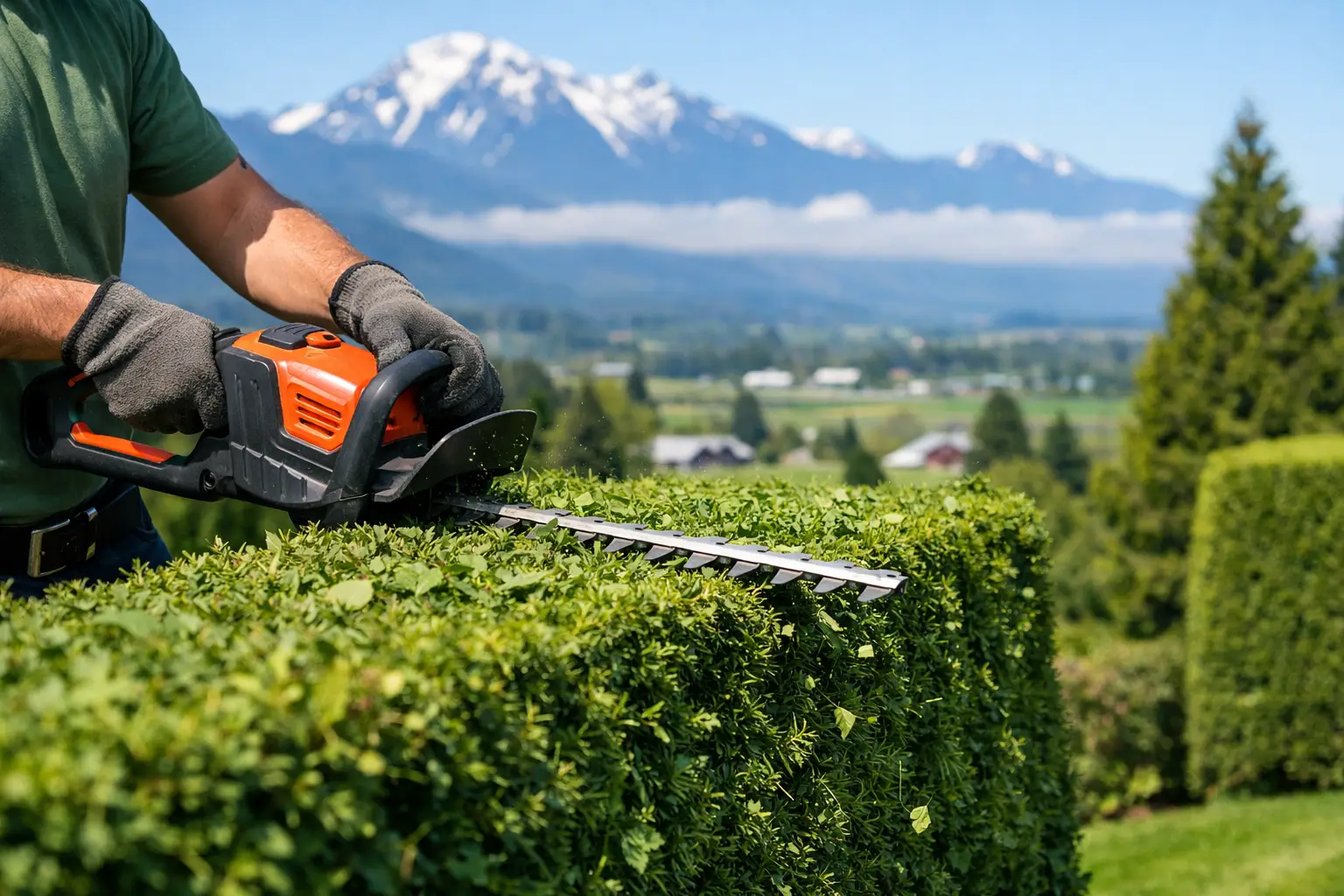
A hedge can go from a clean property border to an overgrown maintenance problem faster than most owners expect. So, when should hedges be trimmed? The short answer is when the plant is actively growing, the weather is workable, and trimming will not interfere with nesting birds or damage new growth. The right window also depends on whether the hedge is evergreen, deciduous, flowering, newly planted, or badly overgrown.
For homes, strata properties, and commercial sites, regular hedge trimming does more than improve curb appeal. It keeps walkways clear, preserves sightlines at driveways, prevents branches from pushing into fences and buildings, and makes the entire property easier to maintain. A planned schedule costs less and creates less disruption than waiting until hedges become a major cleanup job.
When Should Hedges Be Trimmed for the Best Results?
Most established hedges benefit from trimming once or twice during the growing season. In the Fraser Valley, a common schedule is one trim in late spring or early summer after the first strong flush of growth, followed by a lighter cleanup trim in late summer. This keeps the hedge neat without repeatedly cutting back tender new shoots.
Late spring is often the main working window. By then, hedges have started growing steadily, and you can see their true shape. Trimming at this stage helps control size before branches block paths, cover windows, or spread into parking areas and neighboring spaces.
A second trim in late summer is useful for fast-growing hedges such as cedar, privet, laurel, and some boxwood varieties. Keep this later trim conservative. Heavy pruning late in the season can stimulate soft new growth that may be more vulnerable when colder weather arrives.
Avoid major trimming during hard freezes, extreme heat, or drought stress. Freshly cut foliage can dry out quickly in hot conditions, while frozen branches are more likely to snap and heal poorly. If the hedge is dry, stressed, or showing signs of disease, address the underlying problem before cutting it back aggressively.
Timing Depends on the Type of Hedge
Not every hedge follows the same schedule. Cutting at the wrong time may not kill a healthy hedge, but it can reduce flowers, expose bare wood, or leave the plant looking thin for months.
Evergreen hedges
Evergreen hedges, including cedar, yew, arborvitae, and many laurel hedges, are usually trimmed from late spring through summer. The goal is to take small amounts regularly rather than cutting deeply once a year.
Cedar needs particular care. Cutting into old, brown interior wood may not produce new green growth. If a cedar hedge has become too tall or too wide, reduce it gradually over more than one season instead of taking several feet off at once. That approach gives the hedge the best chance to stay full and green.
Deciduous hedges
Deciduous hedges lose their leaves in fall and winter. Many can be shaped during dormancy in late winter, before spring growth begins. This makes the branch structure easier to see and can be a good time for corrective pruning.
For routine appearance, a light trim after spring growth is still often needed. Fast-growing decididuous hedges may require another touch-up through the summer, especially on commercial or strata sites where a consistent appearance matters.
Flowering hedges
Flowering hedges require more careful timing. If a hedge blooms in early spring on older wood, trimming before it flowers may remove the buds. In those cases, prune shortly after the blooms fade.
Hedges that flower later in summer often bloom on new growth and can usually be pruned in late winter or early spring. If you are unsure what kind of hedge you have, wait until flowering is finished before doing a major cut. Missing one cleanup trim is better than removing the season’s flowers by mistake.
New hedges
A newly planted hedge should not be treated like a mature screen. Light trimming can encourage branching and help it fill in, but heavy cutting puts extra stress on roots that are still becoming established.
During the first year, focus on removing damaged tips, keeping the sides even, and watering properly. Once the hedge is rooted and growing well, regular shaping can begin. Patience early on usually produces a denser, healthier hedge later.
Watch the Weather and the Birds
The calendar is useful, but site conditions matter just as much. Trim on a dry day when foliage is not soaked with rain. Dry material is easier to cut cleanly, and it is simpler to collect and haul away afterward. Wet clippings clump, add weight, and can leave a property looking unfinished.
Before work begins, inspect the hedge for active bird nests. Dense hedges are common nesting areas, particularly in spring and early summer. If you find an occupied nest, postpone work in that section until young birds have left. This is the right call for wildlife and avoids turning a routine maintenance visit into a problem.
Also check for utility lines, irrigation heads, fence damage, hidden debris, and branches pressing against structures. On neglected properties, hedge trimming often reveals blackberry canes, fallen limbs, garbage, or old landscape material behind the growth. Planning for cleanup at the same time keeps the job efficient.
How Often Should a Property Schedule Hedge Trimming?
The answer depends on the plant’s growth rate and the standard you need to maintain. A homeowner with a backyard privacy hedge may be fine with one careful trim a year. A strata entrance, retail frontage, or office property may need two or three visits to keep edges clean, signs visible, and pedestrian areas open.
A good rule is to schedule service before the hedge looks badly overgrown. Once branches have grown far past the desired line, correcting the shape means removing more foliage. That can expose thin areas and leave a hedge looking uneven.
For recurring maintenance, the trimming schedule should work alongside mowing, weeding, leaf cleanup, brush removal, and pressure washing where needed. One provider handling these tasks reduces coordination for property owners and managers and helps keep the whole exterior looking consistent.
Trim for Shape, Not Just Height
The most common hedge-trimming mistake is cutting the top flat while allowing the bottom to grow wider than the top. That blocks sunlight from the lower branches, which can lead to thinning and bare spots near the ground.
A healthier shape is slightly wider at the bottom and narrower toward the top. This small taper lets light reach more of the plant and gives the hedge a cleaner, more stable profile. The top does not need to be perfectly level, but it should be even enough to look intentional.
Use sharp, clean tools for a better cut. Dull blades tear foliage and leave ragged edges that brown more easily. Hand pruners work well for detailed shrubs and small touch-ups, while powered hedge trimmers make sense for long, established runs. For tall hedges, do not overreach from a ladder or try to manage a heavy trimmer above shoulder height. The risk is not worth it.
When a Hedge Needs More Than a Trim
Sometimes routine trimming is no longer enough. A hedge may need restoration pruning, branch removal, brush clearing, or full removal if it has become diseased, unsafe, or too large for the space.
Warning signs include large dead sections, branches leaning into roofs or power lines, growth blocking driveway visibility, roots lifting hardscape, or a hedge that has expanded into a neighbor’s access area. Hedges growing over fences and retaining walls can also trap moisture and create ongoing repair issues.
A professional crew can assess whether gradual reduction is realistic or whether removal and replacement will produce a better long-term result. This matters with old cedar hedges in particular, since severe cuts into bare wood may not fill back in.
Hometown Landscaping Near Me helps residential, strata, and commercial clients keep hedges controlled as part of practical, ongoing exterior maintenance. Whether the work is a seasonal trim, an overgrowth cleanup, or a larger property reset, the goal is straightforward: clear access, a tidy appearance, and no leftover mess.
The best time to trim is before the hedge becomes a bigger job than it needs to be. A quick look at growth, weather, and nesting activity can help you choose the right window and keep the property looking cared for all season.
Leave a Reply