
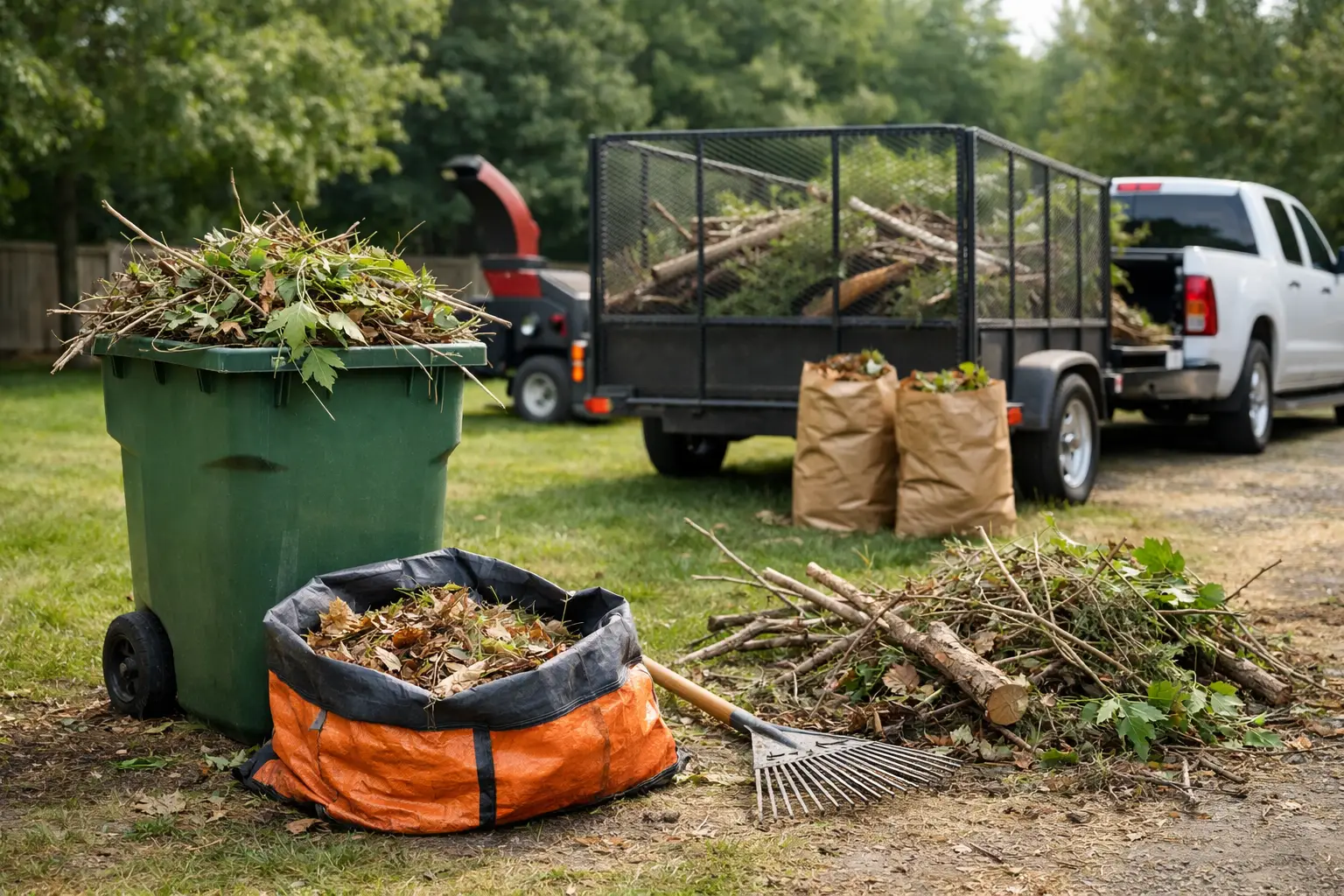
A weekend of pruning, mowing, hedge trimming, or brush clearing can leave a property looking better – and leave you with a pile of branches, leaves, grass, and trimmings with nowhere to go. Knowing how to dispose yard debris the right way keeps the site clean, avoids blocked walkways and drainage areas, and saves you from making several frustrating trips with an overloaded vehicle.
The best disposal method depends on what is in the pile, how much there is, and what local collection or drop-off options are available. A few bags of leaves are one thing. A truckload of blackberry vines, heavy brush, and cut limbs is another.
Start by Separating the Debris
Yard debris is easier and safer to manage when it is sorted before it is bagged, piled, or loaded. Mixing everything together can make curbside collection harder and may mean a disposal site rejects the load.
Keep clean organic material together. This includes leaves, grass clippings, small branches, hedge trimmings, weeds without seed heads, and plant cuttings. These materials can often be composted, collected as yard waste, or taken to a green-waste drop-off site.
Keep non-organic material out of the yard debris pile. Plastic pots, landscape fabric, twine, wire, broken tools, fencing, rocks, soil, and treated lumber do not belong with green waste. The same applies to garbage, pet waste, construction debris, and anything that may be contaminated with chemicals.
If you are dealing with invasive plants, diseased plant material, or large blackberry canes, check local disposal rules before composting. Some materials can spread when handled improperly. Blackberry vines in particular are tough, thorny, and difficult to compact, so they often require more planning than a standard load of trimmings.
Use Curbside Yard Waste Collection for Small Loads
Curbside pickup is usually the simplest option for regular household yard maintenance. It works well for grass clippings, leaves, small pruning debris, and light hedge trimmings that fit within local size and container limits.
Before putting material out, confirm what your collection provider accepts. Rules vary by area. Some programs require paper yard-waste bags, while others use a dedicated cart. Branches may need to be bundled, tied with compostable twine, and cut to a maximum length and diameter.
Do not assume every green item belongs in the bin. Large branches, stumps, root balls, soil, and thick brush are commonly excluded. Overfilling a cart or placing loose material beside it can also result in a missed pickup.
For strata properties and commercial sites, curbside service may not be enough after a seasonal cleanup. A single hedge trimming project or windstorm can produce more material than standard collection can handle. In that case, hauling or professional cleanup is usually more efficient.
Compost What Makes Sense
Composting is a practical way to handle a steady amount of soft, clean yard debris. Grass clippings, dry leaves, non-invasive weeds, and small plant trimmings can become useful material for garden beds over time.
The trade-off is that composting takes space, attention, and patience. A neglected pile can turn slimy, smell unpleasant, or fail to break down. It also is not the right answer for every property. Small yards, managed strata grounds, and commercial sites may not have room for a compost area, and large volumes can overwhelm a home compost system quickly.
A balanced compost pile needs both green and brown material. Fresh grass and soft plant cuttings provide nitrogen, while dry leaves and small twigs provide carbon. Keep the pile damp rather than soaked, and turn it when possible to help air move through it.
Avoid composting diseased plants, heavily seeding weeds, thorny brush, or material treated with herbicides unless you know the product and local guidelines allow it. When there is any doubt, use an approved green-waste disposal option instead.
Take Larger Loads to a Green-Waste Facility
A municipal or private green-waste drop-off site is often the right choice after major pruning, tree trimming, lot clearing, or seasonal cleanup. These facilities are designed to handle larger amounts of branches, brush, leaves, and other organic material that will not fit in curbside collection.
Plan the load before you leave. Cut branches into manageable lengths, keep debris free of trash, and secure everything in the truck or trailer. Loose branches can blow out on the road, creating a safety hazard and possible fines. A tarp and proper tie-downs are not optional when hauling a full load.
This option can be cost-effective if you have a truck, trailer, time, and enough help to load safely. But multiple trips add up. Fuel, disposal fees, loading time, and the work of cleaning out a vehicle can make DIY hauling less appealing once the pile gets large.
For property managers, it is also worth considering the disruption. Leaving brush piles near parking areas, shared walkways, or dumpster enclosures creates a poor appearance and can become a safety issue. Fast removal keeps the property usable while the cleanup is still underway.
Do Not Burn or Dump Yard Debris
Burning may seem like a quick way to reduce a brush pile, but it carries real risks. Local rules may restrict outdoor burning, especially during dry conditions. Smoke affects neighbors, embers can travel, and green or wet material produces a lot of smoke without burning efficiently.
Illegal dumping is not a solution either. Leaving yard debris in vacant lots, wooded areas, ditches, or along roadsides can damage drainage, spread invasive plants, and lead to penalties. It also shifts the cleanup burden to someone else.
Putting branches, sod, and loose green waste in regular trash bins is another common mistake. Garbage providers may refuse the load, and the material is better handled through composting or a proper green-waste channel whenever possible.
When It Makes Sense to Hire Yard Debris Removal
There is a point where disposal becomes more work than the original yard project. That point usually arrives when debris is heavy, bulky, thorny, wet, or spread across a large property.
Professional removal is a good fit after tree work, major hedge reductions, blackberry removal, storm cleanup, move-out property cleanups, and overgrown lot clearing. It is also useful when a homeowner does not have a suitable vehicle or when a strata or commercial property needs debris removed promptly without disrupting residents, tenants, or customers.
A capable cleanup crew can cut down oversized material, load it safely, separate green waste from junk, and leave the work area clear. That matters because disposal is not just about getting the pile off-site. It is about removing tripping hazards, reopening access, and making the property look cared for again.
Hometown Landscaping Near Me handles landscaping cleanup and yard debris removal for homes, strata properties, and commercial sites across the Fraser Valley. For larger jobs, having one crew handle the brush clearing, hauling, and final cleanup is often simpler than coordinating equipment, disposal runs, and separate contractors.
A Better Way to Plan Seasonal Cleanup
The easiest yard debris job is the one that never becomes a mountain. Schedule pruning before branches start hanging over walkways or roofs. Keep up with leaves during the fall instead of waiting until drains are blocked. Trim hedges regularly so each visit produces manageable clippings rather than a full trailer of woody material.
For shared and commercial properties, build debris removal into the maintenance schedule. Regular service keeps outdoor areas presentable and reduces the chance that one missed season turns into an expensive cleanup project.
If the pile is already there, start by sorting it, choosing the right disposal route, and being realistic about the labor involved. A clear property is safer, easier to maintain, and ready for the next job instead of creating one more thing to deal with.
Leave a Reply