
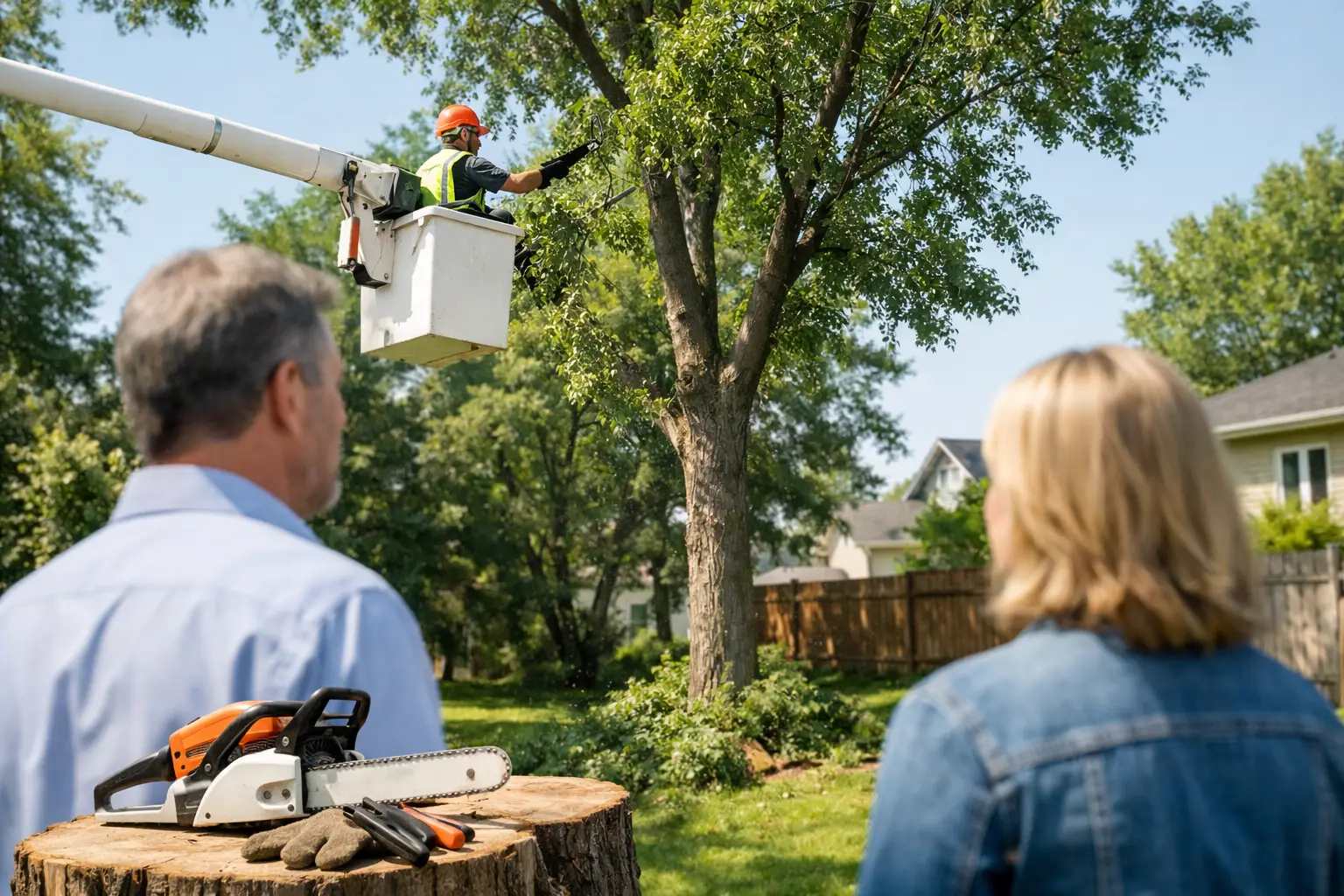
A low branch scraping a roof, a dead limb over a parking stall, or a tree growing into power lines can turn into a problem quickly. So, who is responsible for tree trimming? In most cases, the answer starts with who owns the tree and where it is growing. But rental agreements, shared boundaries, utility corridors, and local rules can all change who needs to arrange and pay for the work.
For homeowners, property managers, strata councils, and commercial operators, the practical goal is the same: deal with overgrowth before it creates a safety issue, damages property, blocks access, or makes the site look neglected.
Who Is Responsible for Tree Trimming?
The property owner is usually responsible for maintaining trees rooted on their land. That includes trimming branches that are dead, damaged, overgrown, or creating a hazard. It also includes keeping trees clear of roofs, driveways, walkways, signs, fences, and structures where possible.
Ownership of the tree generally follows the location of its trunk. If the trunk is entirely on your property, it is typically your tree to maintain, even when branches extend over a neighboring yard. If a tree trunk sits directly on a property line, responsibility may be shared, and it is smart to speak with the neighboring owner before any major pruning or removal work is booked.
Tree care is not only about appearance. A neglected tree can drop limbs, interfere with visibility, damage gutters, create slippery debris on walkways, and give pests a route to a building. Regular trimming is usually far less disruptive and less expensive than waiting until a branch fails during heavy wind or wet weather.
When Branches Hang Over a Neighbor’s Property
Overhanging branches are one of the most common sources of confusion. A neighbor can often trim branches that cross onto their property, but only up to the property line and only if the work does not seriously harm the tree. They generally cannot enter the owner’s property without permission or cut so aggressively that the tree becomes unstable or dies.
That said, being technically allowed to trim a branch does not always make it the best first move. A quick conversation can prevent an avoidable dispute, especially when mature trees, fruit trees, privacy screening, or large limbs are involved. If the tree has visible decay, is close to a building, or requires climbing, a professional assessment is the safer route.
The owner of the tree may still be responsible if a known hazardous limb causes damage. The details depend on local law, insurance coverage, and whether the owner had reasonable notice of the issue. Taking photos, documenting concerns, and arranging prompt maintenance can help show that the problem was handled responsibly.
Rental Homes: Landlord or Tenant?
At a rental property, tree trimming responsibility often comes down to the lease and the type of work needed. Landlords usually handle major maintenance, including removing hazardous limbs, pruning large trees, addressing storm damage, and keeping the property safe for normal use. Work that requires ladders, chainsaws, climbing, or specialized equipment should not be treated as routine tenant maintenance.
Tenants may be responsible for simple ongoing yard care if their lease clearly says so. That might include raking leaves, picking up small fallen branches, or keeping a private yard reasonably tidy. It does not automatically mean the tenant is responsible for a large overgrown hedge, a dying tree, or branches pushing against the roof.
Property managers should make the division clear from the start. A vague lease can lead to delayed work and frustrated tenants. If a tenant reports a low limb, deadwood, or a branch near a service line, the report should be taken seriously and checked promptly.
Strata, HOA, and Shared Property Responsibilities
On strata, condominium, HOA, and multi-unit sites, responsibility depends on whether the tree is on common property or within an owner-controlled area. Trees in shared lawns, parking areas, entrance landscaping, courtyards, and common walkways are commonly maintained by the association or strata corporation.
Individual owners may be responsible for trees within a limited common area, private patio space, or separately maintained yard, depending on the governing documents. The same applies to townhome communities where front and back yard responsibilities differ.
For councils and property managers, a recurring maintenance schedule is the practical answer. Regular inspections and trimming keep sightlines open near roads and exits, reduce falling-branch concerns, and prevent trees from crowding buildings. It also avoids the larger cleanup bills that come when brush, deadwood, and unmanaged growth are left for years.
Commercial Properties Need a Clear Maintenance Plan
Commercial property owners and operators are generally responsible for trees on their sites, including landscaping around storefronts, office buildings, warehouses, parking lots, and access roads. A tenant may take on some landscape duties through a commercial lease, but the agreement should be specific about routine pruning, emergency work, debris removal, and major tree care.
This matters because commercial sites have more people moving through them. A low branch over a sidewalk, obstructed sign, or damaged limb above parking can become a safety and liability concern. Businesses also need clean, accessible entrances and visible signage. Overgrown trees can make a property look unmaintained even when the building itself is in good condition.
A dependable landscaping provider can handle scheduled trimming alongside mowing, hedge work, brush removal, and property cleanup. That keeps the exterior maintained without having to coordinate separate crews for every issue.
Trees Near Power Lines Are Different
Do not attempt to trim branches near overhead electrical lines yourself. Even a branch that appears clear of a line can shift while being cut, and electricity can travel through equipment, wet wood, or the ground.
Utilities may be responsible for trimming vegetation that threatens their equipment or service lines, particularly on public utility corridors. However, the property owner is often still responsible for general tree maintenance on private land. The exact division of responsibility varies by utility provider and location.
If branches are touching, arcing near, or dangerously close to a power line, report the issue to the utility company immediately. For non-emergency clearance needs, contact the utility first to understand its process. Do not hire a general trimming crew to work around energized lines unless they are properly qualified for that work.
Street Trees and Public Rights-of-Way
A tree between the sidewalk and street, beside a public road, or near a drainage area may be under municipal control. In some areas, the adjacent owner has maintenance duties. In others, trimming, removal, or even planting requires city approval.
Before cutting a street tree or removing a large tree, check local requirements. Permits may be needed for protected species, large-diameter trees, environmentally sensitive areas, or work near public infrastructure. This is especially relevant for commercial sites and strata properties, where unauthorized work can create unnecessary cost and delay.
When to Call a Professional
Small, reachable branches can sometimes be handled as part of normal yard work. The job changes when there is height, weight, decay, nearby structures, utility lines, or difficult access. Poor cuts can injure the tree, encourage disease, and create a worse hazard later.
Professional help makes sense when a branch is over a roof, fence, vehicle area, walkway, or public-facing space. It is also the right call when a tree has split limbs, visible rot, storm damage, heavy vines, or thick brush around its base. A crew can trim, remove debris, and leave the area clean rather than creating another weekend project.
For Fraser Valley property owners and managers, Hometown Landscaping Near Me can help with practical tree trimming, brush clearing, hedge work, and complete exterior cleanup. The focus is straightforward: identify what needs attention, complete the work safely, and leave the property looking maintained.
The best time to sort out tree responsibility is before a branch falls or a neighbor has to raise the issue. Check where the trunk sits, review your lease or property documents when applicable, and address visible hazards early. A well-maintained tree adds value and shade. An ignored one can quickly become somebody’s expensive problem.
Leave a Reply