
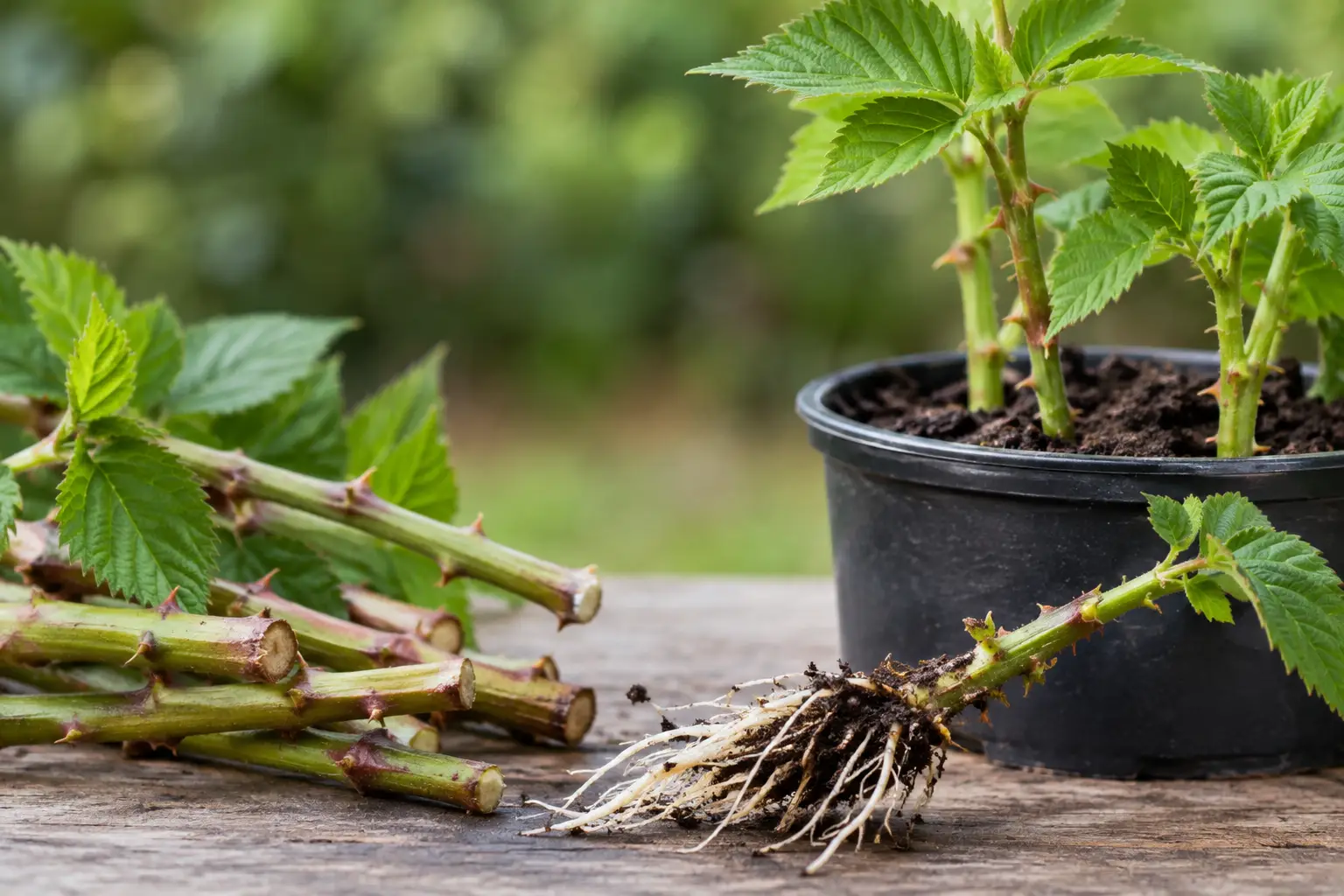
A blackberry patch can look handled after a hard cutback, then send up fresh canes a few weeks later. That is why property owners ask whether blackberry roots regrow. In most cases, the short answer is yes: cutting the visible canes does not remove the underground crown and root system that supports new growth.
For homeowners, strata councils, and commercial property managers in the Fraser Valley, this matters because blackberry can quickly take over fence lines, drainage areas, vacant corners, and access routes. A one-time trim may improve the appearance for now, but lasting control takes a plan that addresses what is below the surface.
Why Blackberry Roots Regrow After Cutting
The invasive blackberry commonly found around local properties has a tough crown at the base of each plant. This woody area sits at or just below ground level, where the canes meet the roots. When canes are cut above the crown, dormant buds can produce replacement shoots.
The root system also stores energy. Even after the top growth is removed, the plant can use those reserves to push out new canes. A heavy cutback may even make the area look worse for a short time, since new shoots are often more visible and grow quickly when they are no longer shaded by older canes.
Not every root section has the same ability to start a new plant, and results depend on the size and condition of the patch. Still, it is not safe to assume the roots will die simply because the brush is gone. Large, established patches are especially likely to return if the crowns remain in place.
Cutting Blackberry Canes Is Not Complete Removal
Cutting has a place in blackberry control. It opens up the area, makes access safer, and allows crews to see where the crowns are located. It is also often the first step when canes are tangled through shrubs, along retaining walls, or around structures.
But cutting alone is maintenance, not removal. If the goal is to reclaim a yard, protect a path, or keep a commercial site presentable, the work needs to continue after the initial brush clearing. That usually means digging out crowns where practical, removing loose roots and debris, and returning to deal with new shoots before they become another dense patch.
There is a trade-off. Full excavation can disturb soil, nearby plants, and irrigation lines, particularly in landscaped beds or tight strata common areas. In those locations, repeated cutting and targeted follow-up may be the more sensible option. The right approach depends on the patch size, access, slope, surrounding vegetation, and how the space will be used afterward.
How to Tell Whether the Blackberry Is Still Active
After clearing, inspect the ground around the old cane bases. A crown often looks like a hard, knobby woody mass. If it is still anchored in the soil, the plant may send out more growth. New shoots can appear close to the original base or spread into adjacent open ground.
The best time to check is during active growing periods, when new green shoots are easy to spot against cleared soil or mulch. Do not wait for the canes to become tall and thorny again. Small shoots are easier to remove, safer to handle, and less likely to root where they touch the ground.
Blackberry canes also form new roots at their tips when they bend down and contact moist soil. This is one reason an unmanaged patch expands beyond its original footprint. Removing cut canes from the site, rather than leaving them piled along the edge, helps prevent new problems and keeps the area easier to monitor.
A Practical Plan for Blackberry Root Regrowth
A reliable blackberry removal plan starts with clearing the visible growth so the work area can be assessed. Canes should be cut back carefully, with attention to hidden hazards such as wire, stumps, uneven ground, utility boxes, and nearby fencing. Thick patches can hide all of these.
Next, identify and remove the main crowns where conditions allow. The goal is to get below the woody base and pull or dig it out rather than simply cutting it flush with the ground. On smaller residential patches, this can be manageable with hand tools and steady follow-up. On large lots, steep banks, or commercial sites, equipment and an organized cleanup process are often needed to keep the job moving safely.
Once the area is cleared, do not leave bare soil unattended if you can avoid it. Depending on the location, mulch, lawn restoration, groundcover, or planned landscaping can reduce the open space available for blackberry shoots and other weeds. New planting is not a guarantee against regrowth, but a maintained surface makes early detection much easier.
The final step is follow-up. Check the site regularly through the growing season and remove new shoots while they are small. A cleared patch may need several visits before it settles down. That is normal. The goal is to exhaust the remaining root reserves and prevent any new canes from reestablishing a foothold.
When to Remove Blackberry Roots
Blackberry work can be done through much of the year, but timing affects the job. Winter clearing often provides better visibility because surrounding vegetation is less active. The ground may be softer, which can help with crown removal, although wet conditions can also make slopes and access areas difficult.
Spring and early summer are useful for spotting active regrowth. This is when follow-up work pays off, since new shoots have not yet become long, thorny canes. Late-season work can also be effective, especially when paired with a cleanup plan before wet weather arrives.
For properties with heavy overgrowth, waiting for the perfect season is rarely the best answer. If blackberry is blocking a walkway, creating a fire or access concern, damaging a fence, or taking over a usable yard area, clearing it promptly and scheduling follow-up is usually more practical.
Common Mistakes That Let Blackberry Return
The most common mistake is cutting canes once and assuming the job is finished. The property looks better, but the crown remains ready to grow again. Another issue is leaving cut canes piled near the cleared area, where they create a messy appearance and can root if conditions are right.
Property owners also sometimes clear only the front edge of a patch. This improves curb appeal but leaves the main source of regrowth behind fences, under trees, or along the back of the lot. Finally, skipped maintenance gives small shoots time to turn into another difficult removal job.
For a large patch, recurring maintenance can cost less and cause fewer headaches than waiting until access is blocked again. Hometown Landscaping Near Me can handle blackberry brush removal as part of broader property cleanup and ongoing exterior maintenance, which helps keep one returning problem from becoming a full-site project.
A clear edge is easier to protect than a buried thicket. Once blackberry has been cut back and the crowns have been addressed, a quick seasonal check is often all it takes to catch regrowth before it takes over the property again.
Leave a Reply