
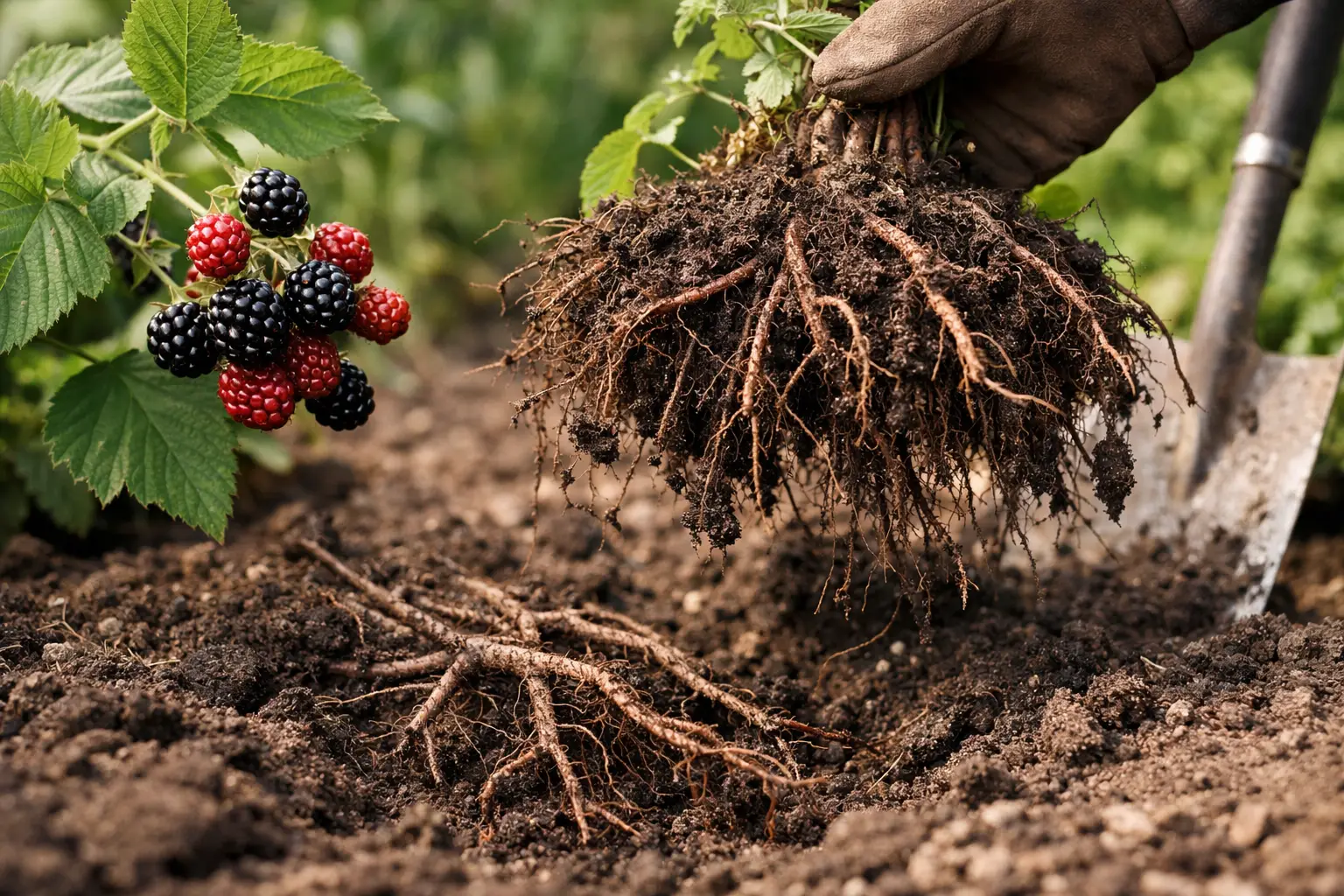
A blackberry patch can look manageable one month and take over a fence line, drainage edge, or unused corner of a property the next. So, are blackberry roots invasive? Invasive blackberry roots can be persistent, but the roots are only part of the problem. The canes, berries, seeds, and ability of stems to root where they touch the ground all help blackberries spread fast.
For homeowners, strata councils, and commercial property managers, this matters because a quick trim rarely solves the issue. Left alone, blackberry growth can block access, crowd out desirable plants, hide debris, create thorny safety hazards, and make regular property maintenance harder. A proper plan starts with knowing how the plant grows.
Are Blackberry Roots Invasive?
Many blackberry species grow from long-lived root systems that can survive for years. In the Pacific Northwest and Fraser Valley, the most common problem plant is Himalayan blackberry. It is an invasive species known for forming dense, thorny thickets that push out native vegetation and take over neglected ground.
Its roots do spread outward, but blackberries are not usually a single underground network racing across a yard in the same way bamboo can. The bigger concern is their ability to regenerate. If the root crown remains in the ground after cutting, it can send up new shoots. Pieces of root left behind may also contribute to regrowth, depending on the conditions and how much viable plant material remains.
Blackberries also spread above ground. Their long canes arch outward and root at the tips when they contact moist soil. This is called tip layering. One established plant can create several new rooted plants around the original patch, making the infestation wider every season.
Birds and other animals spread seeds after eating ripe berries. That is why blackberries often show up along back fences, vacant lots, creek edges, parking areas, and property boundaries even when no one planted them.
Why Cutting Blackberry Canes Is Not Enough
Cutting mature canes back improves access and makes a property look cleaner right away. It is often the first necessary step. But cutting alone usually does not kill established blackberry plants.
The leaves and canes may be gone, while the root crown remains alive below the surface. With stored energy in the roots, new shoots can appear quickly, especially during the growing season. A property owner may clear an area in spring, see fresh growth by summer, and assume the work was done incorrectly. More often, the roots were simply not removed or the regrowth was not managed soon enough.
Repeated mowing or cutting can weaken a small patch over time, but it takes consistency. New shoots need to be cut before they can restore the plant’s energy reserves. On a large, dense infestation, this can become an ongoing labor problem rather than a practical DIY project.
There is also a safety and access issue. Mature blackberry canes are tough, sharply thorned, and tangled through grass, shrubs, fences, and fallen branches. Pulling at a cane without clearing it properly can cause injuries or damage nearby plants and structures.
How Far Do Blackberry Roots Spread?
There is no single distance that applies to every blackberry plant. Soil type, moisture, sunlight, age of the patch, and nearby obstacles all affect root growth. A mature clump can have roots extending several feet from the visible crown, with new plants forming beyond that point when canes tip-root.
That difference is useful when planning removal. The visible thicket is not always the full footprint of the problem. A patch that appears to stop at a fence may have rooted cane tips on the other side. Growth hidden beneath tall grass, ivy, brush, or stored materials can also be missed during a quick cleanup.
For managed properties, inspect a wider area around the patch. Check fence lines, behind sheds, along drainage ditches, beneath hedges, and at the edge of parking lots or landscaped beds. Catching satellite plants early is far easier than clearing a mature wall of blackberry later.
Native Blackberry Versus Invasive Blackberry
Not every blackberry is equally aggressive. Some native blackberry species provide food and habitat and may be suitable in natural areas. Himalayan blackberry, however, is the plant most people mean when they talk about invasive blackberry growth in this region.
It commonly produces thick, ridged canes with large hooked thorns and can grow into dense, nearly impassable stands. Identification can be complicated, particularly where different blackberry species grow together. When the concern is reclaiming usable space, protecting a fence, or opening up an overgrown lot, the practical focus is usually the same: remove the unwanted growth, address the root crowns, and monitor the area.
The Most Effective Way to Remove Blackberries
Complete blackberry removal is generally a multi-step job. The right approach depends on the size of the patch, access, slope, nearby trees, and whether the area will be replanted, landscaped, or kept clear.
First, the canes need to be cut down and removed so the root area is visible and safe to work around. This is more than a cosmetic step. Clearing the thorny material prevents it from tip-rooting elsewhere and allows workers to reach the crown without fighting through tangled growth.
Next, the root crowns should be dug out or otherwise treated as part of an approved control plan. On small patches, careful hand digging can work well. The goal is to remove as much of the crown and major root material as practical without tearing up more of the landscape than necessary. On larger sites, equipment and experienced brush-clearing methods may be needed to make the work efficient.
After initial removal, follow-up is what separates short-term cleanup from real control. Any new shoots should be dealt with promptly. A few minutes spent on small regrowth is far easier than another major clearing job after a full season.
Chemical control may be considered in some situations, particularly on large or difficult sites, but it should be approached carefully. Products, timing, site conditions, local rules, and the risk to desirable plants all matter. Areas near water, gardens, pets, playgrounds, or public access need extra care. Mechanical removal and ongoing maintenance are often the preferred starting point for residential and shared properties.
What to Do After Blackberry Removal
Bare ground is an open invitation for blackberry seeds and other weeds. Once a patch is cleared, decide what the space is meant to become. A maintained lawn, mulch bed, groundcover, shrubs, or a planned planting area gives the site a purpose and makes new growth easier to spot.
Do not assume landscaping fabric alone will stop established blackberries. It may help suppress weeds in some applications, but persistent shoots can find openings, and fabric can become a cleanup problem if it is installed over living roots. Root removal and regular inspections are still the main defense.
Mulch can help reduce weed germination and retain moisture for new plantings. It works best after the area has been properly cleared and when the site is monitored. If new blackberry shoots appear through mulch, remove them while they are small.
For strata and commercial properties, include known problem areas in the regular maintenance schedule. Monthly or seasonal visits can prevent a back corner, utility edge, or perimeter fence from turning into a large brush-removal project. Keeping sightlines clear also supports safety, security, and a cleaner presentation for residents, tenants, customers, and visitors.
When It Makes Sense to Bring in Help
A few young shoots along a fence may be manageable for a homeowner with the right gloves, tools, and time. A mature blackberry patch is different. Professional help is often worthwhile when the growth is taller than waist height, covers a large area, has wrapped through a fence or hedge, sits on a slope, or blocks access to a structure or drainage route.
The job is not just cutting brush. It involves safe removal of thorny debris, getting to the root crowns, hauling away the waste, and setting up follow-up maintenance before the plants recover. Hometown Landscaping Near Me handles blackberry and brush removal as part of practical property cleanup and ongoing landscape maintenance, helping clients avoid the cycle of cutting the same patch back year after year.
If blackberry is starting to crowd a usable part of your property, deal with it before the canes root farther out and the cleanup becomes larger. Early removal, a clear follow-up plan, and regular maintenance keep a small problem from claiming the space you need.
Leave a Reply